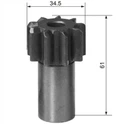
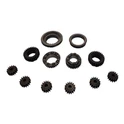
Hey there, fellow gearheads and automotive tech folks – let's cut right to the chase today. If you're in the starter parts game, you've probably run into the question a hundred times: Can the 11 Tooth Starter Bendix I supply actually work in cars with automatic start-stop systems? As someone who's been knee-deep in starter motor drives and Bendix designs for years, this isn't just a random tech question – it's a make-or-break deal for our customers, and a critical part of matching the right part to the right ride. Let's break this down like we're chatting in a parts shop, no stuffy jargon allowed.
First, let's get on the same page about what we're talking about here. For anyone who's a little new to the Bendix side of things: a Starter Bendix (that's short for bendix drive, if you don't already know) is that little overrunning clutch component that sticks out, latches onto the engine's flywheel or flexgear teeth, cranks the engine over to start it, then snaps back so it doesn't grind once the engine is running. The "11 tooth" part refers to the number of gear teeth on that Bendix – simple enough, right? Now, automatic start-stop systems (let's just call them start-stop from here on, saves time) are the fuel-saving tech that shuts off the engine when you're idling at a stop sign or in traffic, then restarts it instantly when you lift your foot off the brake.
So why does start-stop change the game for a Bendix? Let's think about regular start systems first. A normal starter only fires once every time you turn the key or press the start button – maybe once or twice a day for most drivers. A start-stop system? That's cranking the engine 10, 20, even 50 times a day. We're talking way more cycles, higher torque loads on the starter, and the Bendix has to engage and disengage way faster, too. That's the big difference that trips people up – it's not just the number of teeth, it's how the Bendix holds up under constant, repeated stress.
Now, can an 11 tooth Starter Bendix work here? The short answer is: sometimes – and that's the key part you need to get right. It's not a universal yes or no, so let's dig into when it works, when it doesn't, and what makes it tick.
First, let's talk about the core specs that matter for start-stop compatibility. Tooth count is a start, but it's not the only thing. The pitch of the teeth, the diameter of the Bendix, the material it's made from, and how the overrunning clutch is engineered all play way bigger roles. For example, if your 11 tooth Bendix is built for a traditional non-start-stop engine, it's probably going to wear out fast in a start-stop ride. The clutch inside the Bendix might not be designed to handle those rapid, frequent engagements – over time, it could slip, not disengage properly, or even strip teeth on the flywheel.
But wait, not all 11 tooth Bendix units are made the same. At our company, we've spent years refining our Bendix drives to stand up to start-stop duty, and the key upgrades we made were focused on cycle durability and load handling. Let's link this to something concrete: if you check out our Starter Motor Drive page, you'll see that the overrunning clutch technology we use is designed for both high-cycle and high-torque applications. That's exactly what start-stop needs – a clutch that doesn't wear out after a few thousand starts, like a traditional Bendix might.
Another big point: matching the Bendix to the flexgear or flywheel it's working with. Start-stop engines often have heavier-duty flexgears too, right? Because the repeated cranking puts more stress on that component. So if your 11 tooth Bendix is sized for a smaller flywheel (common in older non-start-stop cars), it might not align correctly with a start-stop flexgear – not just tooth count, but how the gear's pitch lines up. That's why some people will mix up 9 Tooth Starter Drive units here, but that's a different tooth count entirely – you can't just swap an 11 tooth for a 9 tooth and call it a day, obviously.
Let's talk about real-world examples. We recently had a customer who runs a fleet of compact sedans with start-stop, and they were using a generic 11 tooth Bendix that was failing every 10,000 miles or so. They switched to our DB Electrical Starter Drive units, specifically engineered for start-stop cycles, and now they're hitting 80,000 miles with zero Bendix issues. The difference? We reinforced the clutch housing, used higher-grade steel for the teeth, and optimized the engagement speed so it doesn't slam into the flexgear every time. That's the kind of thing that makes an 11 tooth Bendix work in start-stop, not just the tooth number alone.
Wait, but what about when it's not a good fit? Let's be honest – there are cases where an 11 tooth Bendix just won't work. If the start-stop system on a particular vehicle has extra-high cranking torque (like in a hybrid, which has a heavier engine and the start motor has to work harder), a standard 11 tooth Bendix might not handle that load. Direct Drive Starter units are often used in those high-torque hybrid applications, because they have a different engagement design that distributes torque more evenly. You can't just swap a direct drive for a Bendix, of course, but it's good context for when tooth count alone isn't enough.
Another factor: thermal management. Start-stop systems run the starter way more often, which means the Bendix and starter motor get hotter. If your 11 tooth Bendix has poor heat dissipation, the lubricant inside the clutch can break down, leading to slipping and failure. We designed our Engine Starter Bendix units with vented clutch housings that let heat escape, so they keep working even after hundreds of start cycles in a day. That's a feature a lot of budget Bendix units skip, which is why they fail in start-stop.


Let's bust a common myth here: some people think "11 tooth is too small for start-stop." Nah, it's not the size – it's the design. We have start-stop applications where a 15 tooth Bendix works too, but the 11 tooth is the right fit for a ton of compact and midsize vehicles because it matches the flexgear size, which is what the manufacturer specified. The problem is that most off-the-shelf 11 tooth Bendixes aren't upgraded for the start-stop cycle.
If you're a mechanic, fleet manager, or parts buyer trying to figure out if your 11 tooth Bendix will work in a start-stop vehicle, here's the quick checklist we use at our shop:
- What's the cycle rating of your Bendix? If it's rated for less than 100,000 cycles, it's not going to cut it for start-stop (which can do that many in a year of stop-and-go city driving).
- Is the Bendix material high-grade steel, or cheap stamped steel? Stamped steel teeth will strip fast under repeated start loads.
- Does it have an overrunning clutch designed for rapid engagement? If the clutch hesitates or slips when you test it, it'll fail in start-stop.
- Does it match the OEM specs for the vehicle's flexgear? Even if it's 11 tooth, if the pitch is off, it'll grind and wear both the Bendix and flexgear.
We've had customers reach out asking if they can take a standard 11 tooth Bendix and modify it for start-stop – our answer is: don't waste your time. The cost of modifying is more than just getting a Bendix engineered specifically for start-stop, and you'll void any warranty too. At our company, we stock 11 tooth Starter Bendix units that are pre-built for start-stop, so you don't have to do the guesswork.
Let's talk about the long game too. Start-stop systems are only going to get more common, as manufacturers push for better fuel economy and lower emissions. That means demand for reliable Bendix units that can handle those cycles is only going up. If you're running a parts inventory, making sure you have the right 11 tooth Bendixes (not just any 11 tooth Bendixes) for start-stop applications is going to save you a ton of comebacks and unhappy customers.
I should also mention that we work with a lot of OEMs that use 11 tooth Bendixes in start-stop vehicles now, as long as the Bendix is built to their specs. The key was optimizing the clutch and material, not changing the tooth count. So it's not like the 11 tooth number is outdated for start-stop – it's just that old, legacy Bendix designs aren't suited for the job.
If you're still on the fence about whether your current 11 tooth Bendix will work, or you're looking to switch to a more reliable option, hit us up. We've got a whole line of starter drives and Bendix units tested specifically for start-stop systems, and our team can help you match the right part to your vehicle, whether it's a compact car, hybrid, or something heavier. No guesswork, no wrong parts, just parts that work.
So to wrap this up: yes, an 11 tooth Starter Bendix can absolutely be used in vehicles with automatic start-stop systems – but only if it's engineered for the unique demands of start-stop. Tooth count alone isn't enough; you need a Bendix with a high-cycle clutch, durable materials, and proper heat management. Generic, off-the-shelf 11 tooth Bendixes will fail fast, but purpose-built start-stop 11 tooth Bendixes are a solid, reliable choice. If you're in the market for parts that hold up, we're here to help you find exactly what you need, no hidden fine print.