As a supplier of the Bendix System, I've been frequently asked whether the Bendix System causes vibrations. This is a question that deserves a comprehensive and scientific exploration. In this blog, I'll delve into the nature of the Bendix System, examine the potential causes of vibrations, and provide insights based on my experience in the field.
Understanding the Bendix System
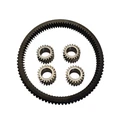
The Bendix System is a crucial component in many starter motors, especially in automotive and industrial applications. Its primary function is to engage the starter motor's pinion gear with the engine's flywheel ring gear when the ignition key is turned. Once the engine starts, the Bendix System disengages the pinion gear to prevent it from being driven by the running engine. This process is essential for starting the engine smoothly and efficiently.
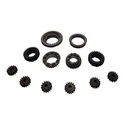
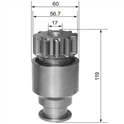
The Bendix System consists of several key parts, including the Bendix drive, which is responsible for moving the pinion gear into and out of engagement with the flywheel. The drive mechanism typically uses a combination of springs, gears, and clutches to achieve this function. When the starter motor is activated, an electromagnetic switch sends power to the motor, which in turn rotates the armature. The rotation of the armature causes the Bendix drive to move the pinion gear forward until it meshes with the flywheel ring gear.
Potential Causes of Vibrations
While the Bendix System is designed to operate smoothly, there are several factors that can potentially cause vibrations. One of the most common causes is misalignment between the pinion gear and the flywheel ring gear. If the gears are not properly aligned, they can create a grinding or rattling noise, which may be felt as vibrations. This misalignment can occur due to wear and tear on the gears, improper installation, or damage to the starter motor or flywheel.
Another possible cause of vibrations is a worn or damaged Bendix drive. Over time, the springs, gears, and clutches in the Bendix drive can wear out, causing it to malfunction. This can result in the pinion gear not engaging or disengaging properly, leading to vibrations. Additionally, a damaged Bendix drive may not be able to hold the pinion gear in place, causing it to move around and create vibrations.
In some cases, vibrations may be caused by problems with the starter motor itself. A faulty starter motor can produce excessive vibrations due to issues such as a worn armature, a damaged commutator, or a loose connection. These problems can cause the motor to run unevenly, resulting in vibrations that can be felt throughout the vehicle or equipment.
Scientific Analysis of Vibrations
To determine whether the Bendix System is causing vibrations, it's important to conduct a scientific analysis. This typically involves using specialized equipment to measure the vibrations and analyze their frequency and amplitude. By comparing the measured vibrations to known standards and benchmarks, it's possible to determine whether the vibrations are within acceptable limits or if there is a problem with the Bendix System.
One common method for measuring vibrations is to use an accelerometer. An accelerometer is a device that measures the acceleration of an object, which can be used to determine the magnitude and frequency of vibrations. By attaching an accelerometer to the starter motor or other components of the Bendix System, it's possible to collect data on the vibrations and analyze them using software.
Another method for analyzing vibrations is to use a vibration analyzer. A vibration analyzer is a more sophisticated device that can provide detailed information about the vibrations, including their frequency spectrum, amplitude, and phase. This information can be used to identify the source of the vibrations and determine whether they are caused by the Bendix System or other factors.


Mitigating Vibrations
If vibrations are detected in the Bendix System, there are several steps that can be taken to mitigate them. One of the first steps is to check for misalignment between the pinion gear and the flywheel ring gear. If misalignment is detected, the gears can be adjusted or replaced to ensure proper engagement. Additionally, the Bendix drive can be inspected for wear and damage, and any worn or damaged parts can be replaced.
Another way to mitigate vibrations is to use vibration dampening materials. These materials can be used to absorb and reduce the vibrations, preventing them from being transmitted to other parts of the vehicle or equipment. Vibration dampening materials can be applied to the starter motor, the Bendix drive, or other components of the system.
Finally, it's important to ensure that the Bendix System is properly installed and maintained. This includes following the manufacturer's instructions for installation and maintenance, as well as regularly inspecting the system for wear and damage. By taking these steps, it's possible to minimize the risk of vibrations and ensure the smooth operation of the Bendix System.
Conclusion
In conclusion, while the Bendix System is a reliable and efficient component in many starter motors, it can potentially cause vibrations under certain conditions. By understanding the potential causes of vibrations and taking appropriate steps to mitigate them, it's possible to ensure the smooth operation of the Bendix System and prevent any issues from arising.
If you're experiencing vibrations in your Bendix System or have any questions about its operation, I encourage you to contact us. As a supplier of the Bendix System, we have the expertise and experience to help you diagnose and resolve any issues you may be facing. We offer a wide range of Bendix System products, including the DB Electrical Starter Drive, SVC PWR AWN, and Bendix for Starter Motor. Our team of experts is available to provide you with the support and guidance you need to ensure the optimal performance of your Bendix System.
References
- Automotive Starter Motor Handbook
- Industrial Starter Motor Maintenance Guide
- Bendix System Technical Manual