Hey there! As a supplier of Starter Motor Bendix, I often get asked about how to measure the dimensions of these crucial components. It's not as complicated as it might seem at first glance, but it does require a bit of know - how and the right tools. In this blog, I'll walk you through the process step by step.
First off, let's understand why measuring the dimensions of a Starter Motor Bendix is so important. A Bendix is a key part of the starter motor system. It engages with the engine's flywheel to start the engine. If the dimensions are off, it won't fit properly, which can lead to all sorts of problems, like the engine not starting or excessive wear and tear on the components.
Tools You'll Need
To measure a Starter Motor Bendix, you're going to need a few basic tools. A caliper is an absolute must. It's a precision measuring instrument that can give you accurate readings of lengths, diameters, and thicknesses. You can get digital calipers that are super easy to read, or if you're old - school, a vernier caliper will do the job just fine. A micrometer is also useful, especially for measuring very small dimensions with high accuracy. And don't forget a ruler for some quick, rough measurements.


Measuring the Overall Length
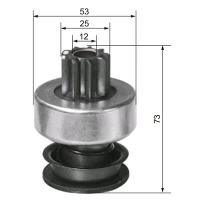
The overall length of the Starter Motor Bendix is one of the most important dimensions. To measure it, place the Bendix on a flat surface. Make sure it's lying straight. Then, use your caliper to measure from the very end of the Bendix, usually the end that engages with the flywheel, to the other end. Make sure the caliper jaws are perpendicular to the axis of the Bendix for an accurate measurement. Write down this measurement, as it's a key spec that you'll need when replacing or installing the Bendix.
Measuring the Shaft Diameter
The shaft of the Starter Motor Bendix is another critical part to measure. The diameter of the shaft needs to be just right to fit into the starter motor housing and the associated components. To measure the shaft diameter, open the caliper jaws and place them around the shaft. Gently close the jaws until they just touch the shaft on opposite sides. Read the measurement on the caliper display. You should take a few measurements at different points along the shaft to make sure it's a consistent diameter. If there are any variations, it could indicate wear or damage.
Measuring the Gear Dimensions
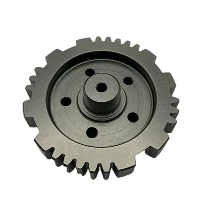
The gear on the Bendix is what meshes with the engine's flywheel. Measuring the gear is a bit more involved. First, measure the outer diameter of the gear. Place the caliper jaws around the outside of the gear teeth and take the measurement. Next, you'll want to measure the pitch diameter. This is a bit trickier and might require some knowledge of gear theory. The pitch diameter is the diameter of an imaginary circle that the gear teeth would form if they were perfectly meshed with another gear. You can use a gear - measuring tool or calculate it based on the number of teeth and the pitch of the gear.
The number of teeth on the gear is also important. You can simply count them. For example, a 11 Tooth Starter Bendix has 11 teeth, and this number affects how the Bendix engages with the flywheel. Different engines might require different numbers of teeth for proper operation.
Measuring the Bore Dimensions
If the Bendix has a bore, like for a shaft to pass through, you'll need to measure the diameter of the bore. Insert the caliper jaws into the bore and expand them until they touch the inner walls. Take the measurement. Just like with the shaft, take multiple measurements at different points to ensure the bore is a consistent diameter.
Checking for Wear and Tear
While you're measuring the dimensions, it's a good idea to check for any signs of wear and tear. Look for worn - down gear teeth, scratches on the shaft, or any other visible damage. If you notice any significant wear, it might be time to replace the Bendix. A worn Bendix can cause problems like poor starting performance or even damage to the engine's flywheel.
Comparing with Manufacturer's Specifications
Once you've taken all your measurements, it's time to compare them with the manufacturer's specifications. These specs can usually be found in the product manual or on the manufacturer's website. If your measurements are within the specified tolerances, then your Bendix is in good shape. If not, you might need to look for a replacement.
Why Accurate Measurements Matter
Accurate measurements are crucial for several reasons. First, as I mentioned earlier, a properly - sized Bendix is essential for the engine to start smoothly. If the dimensions are off, the Bendix might not engage properly with the flywheel, which can lead to a no - start condition. Second, accurate measurements help with maintenance and troubleshooting. If you know the exact dimensions of the Bendix, you can quickly identify if a problem is due to a worn or incorrectly - sized component.
Our Starter Motor Bendix Offerings
At our company, we offer a wide range of Starter Motor Bendix options. We have the 11 Tooth Starter Bendix which is popular for many applications. We also have the SVC PWR AWN which is known for its high - performance and durability. And if you're in need of a Car Starter Replacement, we've got you covered with top - quality Bendixes that are designed to fit perfectly and last a long time.
Contact Us for Your Starter Motor Bendix Needs
If you're in the market for a Starter Motor Bendix, whether you need to replace an old one or are building a new engine, we'd love to hear from you. Our team of experts can help you find the right Bendix for your specific application. We pride ourselves on providing high - quality products and excellent customer service. So, don't hesitate to reach out and start a conversation about your Starter Motor Bendix requirements.
References
- Automotive Starter Motor and Generator Manual, various editions
- Gear Design and Manufacturing textbooks
- Manufacturer's product manuals for Starter Motor Bendixes