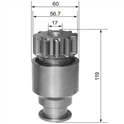
As a supplier of Bendix Starter Drives, I've witnessed firsthand the critical role these components play in a vehicle's starting system, especially under challenging conditions. Cold weather is one such challenge that can significantly impact the performance of a starter drive. In this blog, I'll delve into how the Bendix Starter Drive performs in cold weather, exploring the factors at play and offering insights based on real - world experience.
Understanding the Bendix Starter Drive
Before we discuss its performance in cold weather, let's briefly understand what a Bendix Starter Drive is. The Bendix Starter Drive is an essential part of the starter motor assembly. Its primary function is to engage the flywheel of the engine when the ignition key is turned, allowing the starter motor to crank the engine. Once the engine starts, the Bendix Drive disengages to prevent the starter motor from being damaged by the high - speed rotation of the engine.
There are different types of Bendix Starter Drives available in the market, such as the Starter Motor Drive Bendix, Standard Bendix Drive, and Prestolite Starter Bendix. Each type has its own design features and is suitable for various applications.
Challenges in Cold Weather
Cold weather presents several challenges for the Bendix Starter Drive. One of the most significant issues is the increased viscosity of lubricants. In cold temperatures, the oil and grease used in the starter drive become thicker. This thicker lubricant can impede the movement of the Bendix Drive's components, such as the pinion gear and the overrunning clutch. As a result, the engagement of the pinion gear with the flywheel may be delayed or incomplete.
Another challenge is the reduced battery performance. Cold weather can cause the battery's capacity to drop significantly. A weak battery may not be able to provide enough power to the starter motor, which in turn affects the operation of the Bendix Starter Drive. If the starter motor doesn't receive sufficient power, the Bendix Drive may not be able to engage the flywheel with enough force, leading to a failed start.
The metal components of the Bendix Starter Drive also contract in cold weather. This contraction can change the clearances between parts, potentially causing binding or misalignment. For example, the pinion gear may not slide smoothly onto the flywheel teeth, or the overrunning clutch may not operate as intended.
Performance of Bendix Starter Drive in Cold Weather
Despite these challenges, the Bendix Starter Drive is designed to perform well in cold conditions. The materials used in its construction are carefully selected to withstand low temperatures. For instance, the gears are made of high - strength steel that retains its mechanical properties even in cold weather. This ensures that the pinion gear can engage the flywheel teeth without breaking or wearing prematurely.
The overrunning clutch, a crucial part of the Bendix Starter Drive, is engineered to function reliably in cold environments. It is designed to engage quickly and disengage smoothly, even when the lubricant is thick. The clutch mechanism is optimized to handle the increased resistance caused by the cold - thickened lubricant, allowing the starter drive to transfer power effectively from the starter motor to the engine.


Many Bendix Starter Drives are also equipped with special lubricants that are formulated to perform well in cold weather. These lubricants have a lower viscosity at low temperatures, which helps to reduce the resistance to movement of the drive's components. This ensures that the pinion gear can slide onto the flywheel teeth easily and that the overrunning clutch can operate smoothly.
Real - World Testing and User Experiences
In real - world testing, Bendix Starter Drives have shown excellent performance in cold weather. Many vehicle owners in cold climates have reported that their Bendix - equipped vehicles start reliably even in extremely low temperatures. For example, in regions where winter temperatures can drop to - 30°C or lower, vehicles with Bendix Starter Drives have been able to start with minimal issues.
However, it's important to note that proper maintenance is crucial for optimal performance in cold weather. Regularly checking the battery's charge level, ensuring that the starter motor and Bendix Drive are clean and free of debris, and using the recommended lubricants can all contribute to a more reliable start in cold conditions.
Tips for Ensuring Good Performance in Cold Weather
- Battery Maintenance: Keep your battery fully charged. A well - charged battery is more likely to provide enough power to the starter motor in cold weather. Consider using a battery charger or a trickle charger during the winter months.
- Lubrication: Use the recommended lubricants for your Bendix Starter Drive. These lubricants are designed to perform well in cold temperatures and can help reduce the resistance to movement of the drive's components.
- Inspection: Regularly inspect the Bendix Starter Drive for any signs of wear or damage. Replace any worn - out parts as soon as possible to ensure reliable operation.
Conclusion
The Bendix Starter Drive is a reliable component that performs well in cold weather. Its design and construction are optimized to overcome the challenges posed by low temperatures, such as increased lubricant viscosity, reduced battery performance, and metal contraction. However, proper maintenance is essential to ensure that the drive continues to operate at its best in cold conditions.
If you're in the market for a high - quality Bendix Starter Drive, I invite you to contact us for a detailed discussion about your specific requirements. Our team of experts can provide you with the right solution for your vehicle or equipment. Whether you need a Starter Motor Drive Bendix, Standard Bendix Drive, or Prestolite Starter Bendix, we're here to help you make the best choice.