As a supplier of Inertia Drive Starters, I've witnessed firsthand how the design intricacies of these components significantly influence their performance. In this blog, I'll delve into the key design aspects of Inertia Drive Starters and explore how each element impacts their overall functionality and efficiency.
The Basics of Inertia Drive Starters
Inertia Drive Starters are a type of starter motor used in internal combustion engines to initiate the engine's operation. The fundamental principle behind an inertia drive starter is based on the transfer of rotational energy from the starter motor to the engine's flywheel or ring gear. When the ignition key is turned, an electrical current is sent to the starter motor, which begins to rotate. As the motor spins, a mechanism within the starter drive engages with the engine's ring gear, transferring the rotational force and causing the engine to start.
Design Elements and Their Impact on Performance
Gear Ratio
The gear ratio is a crucial design parameter in an Inertia Drive Starter. It determines the relationship between the speed of the starter motor and the speed at which the engine's ring gear is turned. A higher gear ratio means that the starter motor can turn the engine's ring gear with more torque, but at a slower speed. Conversely, a lower gear ratio allows the starter motor to turn the ring gear at a higher speed, but with less torque.
A well - designed gear ratio is essential for optimal performance. In cold weather, for example, engines require more torque to start because the oil is thicker and the internal components are more resistant to movement. A starter with a higher gear ratio can provide the necessary torque to overcome this resistance and start the engine. On the other hand, in normal operating conditions, a slightly lower gear ratio may be more suitable, as it allows the engine to start more quickly.
Bendix Drive Design
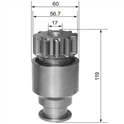
The Bendix drive is a key component of the Inertia Drive Starter. It is responsible for engaging and disengaging the starter motor from the engine's ring gear. The design of the Bendix drive can have a significant impact on the starter's performance.


A properly designed Bendix drive should engage smoothly and quickly with the ring gear when the starter motor begins to rotate. It should also disengage cleanly once the engine starts to prevent the starter motor from being damaged by the high - speed rotation of the engine. For more information on Starter Bendix Replacement and Starter Bendix Drive Clutch, you can refer to the provided links.
The shape and material of the Bendix drive teeth are also important. Teeth that are too sharp may cause excessive wear on the ring gear, while teeth that are too blunt may not engage properly. High - quality materials are necessary to ensure the durability of the Bendix drive, as it is subject to high - stress conditions during the starting process.
Solenoid Design
The solenoid is an electromagnetic switch that controls the flow of electrical current to the starter motor and engages the Bendix drive. The design of the solenoid affects the speed and reliability of the starter's operation.
A solenoid with a strong magnetic field can quickly engage the Bendix drive and supply sufficient current to the starter motor. This ensures that the starter motor can reach its full speed in a short time, reducing the starting time of the engine. Additionally, a well - designed solenoid should be able to withstand high temperatures and electrical currents without malfunctioning.
Housing Design
The housing of the Inertia Drive Starter provides protection for the internal components and helps to dissipate heat. A well - designed housing should be sturdy enough to withstand the vibrations and impacts that occur during normal engine operation.
The shape and size of the housing can also affect the starter's performance. A compact housing may be more suitable for engines with limited space, but it may also restrict the flow of air around the starter motor, leading to increased heat buildup. On the other hand, a larger housing may allow for better heat dissipation but may be more difficult to install in some engine compartments.
Impact on Starting Reliability
The design of the Inertia Drive Starter has a direct impact on its starting reliability. A starter with a well - designed gear ratio, Bendix drive, solenoid, and housing is more likely to start the engine consistently, even under challenging conditions.
For example, in a vehicle that is frequently used in cold climates, a starter with a high - torque gear ratio and a reliable Bendix drive is essential. The high - torque gear ratio provides the necessary force to turn the engine over, while the reliable Bendix drive ensures that the starter motor engages and disengages smoothly.
Impact on Durability
Durability is another important aspect of starter performance. A well - designed Inertia Drive Starter can withstand the rigors of repeated use and harsh operating conditions.
The choice of materials for the internal components, such as the Bendix drive and the solenoid, plays a crucial role in determining the starter's durability. High - quality materials can resist wear, corrosion, and heat, extending the lifespan of the starter. Additionally, a well - designed housing can protect the internal components from damage caused by external factors, such as dirt, water, and vibrations.
Impact on Efficiency
Efficiency is also affected by the design of the Inertia Drive Starter. A starter that is designed to minimize energy losses can reduce the electrical load on the vehicle's battery and alternator.
For instance, a starter with a low - friction Bendix drive and a well - designed solenoid can operate more efficiently. The low - friction Bendix drive reduces the amount of energy required to engage and disengage the starter motor, while the well - designed solenoid ensures that the electrical current is used effectively.
Conclusion and Call to Action
In conclusion, the design of the Inertia Drive Starter has a profound impact on its performance, including starting reliability, durability, and efficiency. As a supplier, we understand the importance of these design elements and strive to provide high - quality starters that meet the diverse needs of our customers.
Whether you are in the automotive, marine, or industrial sector, having a reliable Inertia Drive Starter is essential for the smooth operation of your engines. If you are interested in learning more about our products or would like to discuss your specific requirements, we encourage you to reach out to us for a procurement discussion. We are committed to providing the best solutions for your starting needs.
References
- Automotive Electrical and Electronic Systems, Third Edition, by William H. Crouse and Donald L. Anglin
- Modern Automotive Technology, Tenth Edition, by James D. Halderman