As a supplier of overrunning - clutch drives, I've been deeply involved in the industry for a long time. While overrunning - clutch drives offer numerous advantages in various applications, it's essential to be aware of their disadvantages. This blog post aims to delve into the drawbacks of overrunning - clutch drives to provide a comprehensive understanding for potential customers.
1. Limited Torque Transmission
One of the primary disadvantages of overrunning - clutch drives is their limited torque - transmitting capacity. The design of an overrunning clutch is such that it allows the drive to engage and disengage based on the relative rotation of the input and output shafts. However, when it comes to high - torque applications, the clutch may not be able to handle the load effectively.
In many industrial settings, heavy machinery requires a significant amount of torque to operate. For instance, in large - scale manufacturing plants, equipment like presses and crushers demand high - torque drives. An overrunning - clutch drive may slip under such high - torque conditions, leading to inefficiencies in the system. This slippage can cause a loss of power and potentially damage the clutch itself over time.
2. Wear and Tear
Overrunning - clutch drives are subject to significant wear and tear, especially in applications where they are frequently engaged and disengaged. The constant friction between the clutch components during the engagement and disengagement process can lead to the degradation of the clutch surfaces.
For example, in automotive starter systems, the overrunning - clutch drive is used to engage the starter motor with the engine's flywheel. Every time the engine is started, the clutch engages and then disengages once the engine starts running. This repeated action causes the clutch teeth or sprags to wear down. As the wear progresses, the clutch may not engage or disengage properly, leading to starting problems.
3. Noise and Vibration
Another drawback of overrunning - clutch drives is the noise and vibration they can generate. When the clutch engages or disengages, there is often a sudden impact that can produce a loud noise. This noise can be a nuisance in environments where quiet operation is required, such as in residential areas or in some precision manufacturing facilities.


Vibration is also a common issue. The uneven engagement and disengagement of the clutch can cause vibrations in the drive system. These vibrations can be transmitted to other components of the machinery, potentially leading to premature wear and failure of those components. For example, in a power transmission system, the vibrations from an overrunning - clutch drive can affect the bearings and shafts, reducing their lifespan.
4. Complexity in Maintenance
Maintaining overrunning - clutch drives can be a complex task. The internal components of the clutch, such as the sprags, rollers, or teeth, need to be inspected regularly for wear and damage. If any of these components are worn out, they need to be replaced promptly to ensure the proper functioning of the clutch.
Moreover, the disassembly and reassembly of an overrunning - clutch drive require specialized tools and knowledge. Incorrect maintenance procedures can lead to further damage to the clutch. For instance, if the clutch is not reassembled correctly, it may not engage or disengage properly, resulting in operational issues.
5. Cost
Overrunning - clutch drives can be relatively expensive compared to other types of drives. The manufacturing process of these clutches involves precision engineering to ensure their proper functioning. The high - quality materials used in the construction of the clutch also contribute to the cost.
In addition to the initial purchase cost, the cost of maintenance and replacement parts can also be significant. As mentioned earlier, the wear and tear on the clutch components require regular replacement, which adds to the overall cost of ownership.
6. Limited Speed Range
Overrunning - clutch drives have a limited speed range within which they can operate effectively. At very high speeds, the centrifugal forces acting on the clutch components can cause the clutch to disengage prematurely or not engage properly. On the other hand, at very low speeds, the clutch may not be able to transmit the required torque efficiently.
For example, in a high - speed industrial conveyor system, an overrunning - clutch drive may not be suitable if the conveyor needs to operate at varying speeds. The limited speed range of the clutch can restrict the flexibility of the system and may require additional components to compensate for the speed variations.
7. Environmental Sensitivity
Overrunning - clutch drives can be sensitive to environmental conditions. For instance, in dusty or dirty environments, the dust and debris can enter the clutch and cause damage to the internal components. Moisture can also be a problem, as it can lead to corrosion of the clutch parts.
In applications where the clutch is exposed to extreme temperatures, such as in automotive engines or industrial furnaces, the performance of the overrunning - clutch drive can be affected. High temperatures can cause the lubricants in the clutch to break down, leading to increased friction and wear.
8. Compatibility Issues
When integrating an overrunning - clutch drive into a system, compatibility issues can arise. The clutch needs to be compatible with the input and output shafts, as well as other components of the drive system. If the clutch is not properly matched with the system, it may not function correctly.
For example, if the shaft diameters or the spline profiles do not match, the clutch may not engage or disengage smoothly. This can lead to operational problems and potentially damage the clutch and other components of the system.
Despite these disadvantages, overrunning - clutch drives still have their place in many applications. They are widely used in automotive starter systems, power tools, and various industrial machinery. If you are considering using an overrunning - clutch drive in your application, it's important to carefully weigh the advantages and disadvantages.
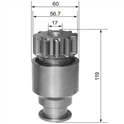
If you are interested in our overrunning - clutch drives, such as the 9 Tooth Starter Drive, 8n Starter Bendix, or Bendix Drive, and have any questions or would like to discuss a potential purchase, please feel free to contact us. We are here to provide you with the best solutions for your specific needs.
References
- Norton, R. L. (2004). Design of Machinery: An Introduction to the Synthesis and Analysis of Mechanisms and Machines. McGraw - Hill.
- Shigley, J. E., & Mischke, C. R. (2001). Mechanical Engineering Design. McGraw - Hill.
- Juvinall, R. C., & Marshek, K. M. (2006). Fundamentals of Machine Component Design. Wiley.