When it comes to automotive starters, two commonly used types are the Inertia Drive Starter and the pre - engaged starters. As a supplier of Inertia Drive Starters, I am well - versed in the characteristics of both types and can provide a detailed comparison.
Inertia Drive Starter
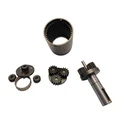
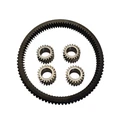
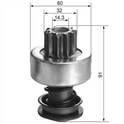
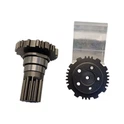
The Inertia Drive Starter operates based on the principle of inertia. When the starter motor is energized, it rotates at a high speed. The drive pinion, which is initially disengaged from the flywheel ring gear, is then forced forward by the inertia generated from the rapid rotation of the motor shaft. As the motor speeds up, the pinion moves along a helical shaft and meshes with the flywheel ring gear. Once the engine starts, the drive pinion is disengaged automatically.
One of the significant advantages of the Inertia Drive Starter is its simplicity. It has a relatively straightforward design with fewer moving parts compared to some other starter types. This simplicity not only makes it cost - effective to manufacture but also easier to maintain. For small - scale automotive applications or in situations where cost is a major concern, the Inertia Drive Starter is often a preferred choice.
Another benefit is its self - adjusting nature. The inertia - based engagement mechanism allows the pinion to adjust to the rotational speed of the flywheel. This means that it can adapt to different engine starting conditions, such as cold starts when the engine requires more torque to turn over.
However, the Inertia Drive Starter also has some limitations. It can be quite noisy during the engagement process. The sudden meshing of the pinion with the flywheel ring gear can create a loud clunking sound, which may be a nuisance in some environments. Additionally, in high - torque applications, the inertia - based engagement may not be as reliable as other methods. There is a risk that the pinion may not engage properly with the flywheel, especially if the engine is difficult to start or if the starter motor is under stress.
Pre - Engaged Starters
Pre - engaged starters, on the other hand, have a different operating principle. Before the starter motor begins to rotate the engine, the drive pinion is first moved into mesh with the flywheel ring gear using an electromagnetic solenoid. Once the pinion is properly engaged, the starter motor then provides the torque to turn over the engine.
One of the key advantages of pre - engaged starters is their smooth and quiet operation. Since the pinion is engaged with the flywheel before the motor starts to turn, there is no sudden impact like in the Inertia Drive Starter. This results in a much quieter starting process, which is highly desirable in modern automotive applications where noise reduction is a priority.
Pre - engaged starters are also more reliable in high - torque situations. The electromagnetic solenoid ensures that the pinion is firmly engaged with the flywheel, even when the engine requires a large amount of torque to start. This makes them suitable for heavy - duty vehicles, such as trucks and buses, as well as high - performance cars.
However, pre - engaged starters are generally more complex and expensive than Inertia Drive Starters. The addition of the electromagnetic solenoid and the associated control circuitry increases the manufacturing cost. Moreover, the more complex design means that there are more components that can potentially fail, which may lead to higher maintenance costs over time.
Technical Comparison
In terms of technical specifications, the Inertia Drive Starter typically has a lower power consumption compared to pre - engaged starters. This is because its design is more focused on simplicity and basic functionality. The power output of an Inertia Drive Starter is usually sufficient for small to medium - sized engines, but may not be adequate for larger engines.
Pre - engaged starters, on the other hand, are designed to handle higher power requirements. They can provide a large amount of torque right from the start, thanks to the pre - engagement mechanism. This makes them suitable for engines with high compression ratios or large displacement.
In terms of durability, the Inertia Drive Starter's simplicity can be an advantage. With fewer moving parts, there is less wear and tear over time. However, the engagement mechanism can be subject to more stress, especially in harsh starting conditions. Pre - engaged starters, although more complex, are often built with more robust components to withstand the high - torque demands. The electromagnetic solenoid and the gear engagement system are designed to be reliable over a long service life.
Application Comparison
In the automotive industry, the choice between an Inertia Drive Starter and a pre - engaged starter depends on the specific application. For economy cars and small motorcycles, the Inertia Drive Starter is a popular choice due to its low cost and simplicity. These vehicles typically have smaller engines that do not require a large amount of torque to start, making the Inertia Drive Starter sufficient for the job.
For larger vehicles, such as SUVs, trucks, and heavy - duty machinery, pre - engaged starters are more commonly used. These vehicles need a reliable and powerful starting system to handle the high - torque requirements of their engines. The smooth and reliable engagement of pre - engaged starters ensures that the engine can be started quickly and efficiently, even in challenging conditions.
Industry Trends and the Future of Starters
In recent years, there has been a growing trend towards more advanced starting systems. With the increasing demand for quieter, more reliable, and energy - efficient vehicles, the automotive industry is constantly looking for ways to improve starter technology.
Pre - engaged starters are likely to continue to dominate the market for high - end and heavy - duty vehicles. Manufacturers are investing in research and development to make these starters even more efficient and reliable. For example, new materials are being used to reduce the weight of the starter components, while advanced control algorithms are being developed to optimize the engagement process.
However, the Inertia Drive Starter still has its place in the market. Its low cost and simplicity make it a viable option for budget - conscious consumers and for applications where high - performance starting is not a critical requirement. There is also potential for innovation in the Inertia Drive Starter design to address its limitations, such as reducing noise and improving engagement reliability.
Conclusion
In conclusion, both Inertia Drive Starters and pre - engaged starters have their own unique advantages and disadvantages. The Inertia Drive Starter offers simplicity and cost - effectiveness, making it suitable for small - scale applications. On the other hand, pre - engaged starters provide smooth operation, high - torque performance, and reliability, which are essential for larger and more demanding vehicles.
As a supplier of Inertia Drive Starters, I understand the needs of different customers. Whether you are looking for an affordable starting solution for a small engine or need a high - performance starter for a heavy - duty vehicle, I can provide you with the right product. If you are interested in learning more about our Inertia Drive Starters or would like to discuss your specific requirements, please feel free to contact me for a procurement negotiation.
References
- Automotive Starter Systems Handbook
- Technical Papers on Starter Motor Design and Operation
It should be noted that the inserted links can be added as follows:
The Inertia Drive Starter, also known as the Bendix System, operates based on the principle of inertia.
Some of our advanced Inertia Drive Starters come with features similar to the SVC PWR AWN which enhance their performance.


The drive mechanism in our Inertia Drive Starters is designed with high - quality components, similar to the Drive and Shaft ASM.