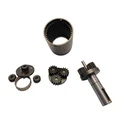
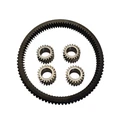
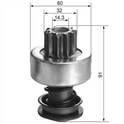
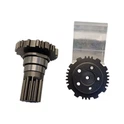
As a trusted supplier of Standard Bendix Drives, I am often asked about the materials used in these essential components. In this blog post, I will delve into the various materials that make up a Standard Bendix Drive, exploring their properties, functions, and why they are crucial for the optimal performance of the drive.
The Core Components of a Standard Bendix Drive
A Standard Bendix Drive consists of several key components, each made from specific materials chosen for their durability, strength, and ability to withstand the rigors of the starting process. The main components include the drive housing, the pinion gear, the overrunning clutch, and the spring.
Drive Housing
The drive housing is the outer casing that encloses and protects the internal components of the Bendix Drive. It is typically made from high-strength steel or aluminum alloy. Steel is a popular choice due to its excellent strength-to-weight ratio, high durability, and resistance to wear and corrosion. Aluminum alloy, on the other hand, is lightweight and offers good thermal conductivity, which helps in dissipating heat generated during operation.
The choice of material for the drive housing depends on the specific application and requirements of the vehicle. For heavy-duty applications, such as in commercial trucks and industrial equipment, steel is often preferred due to its superior strength. In contrast, for lighter vehicles like passenger cars and motorcycles, aluminum alloy may be used to reduce weight and improve fuel efficiency.
Pinion Gear
The pinion gear is a crucial component of the Bendix Drive that engages with the flywheel of the engine to transmit torque and start the engine. It is typically made from high-quality alloy steel, such as chrome-molybdenum steel or nickel-chromium steel. These alloys offer excellent hardness, toughness, and wear resistance, ensuring that the pinion gear can withstand the high loads and stresses during the starting process.
The manufacturing process of the pinion gear involves precision machining and heat treatment to achieve the desired hardness and surface finish. The teeth of the pinion gear are carefully designed and shaped to ensure smooth engagement with the flywheel teeth, minimizing noise and wear.
Overrunning Clutch
The overrunning clutch is responsible for transmitting torque from the starter motor to the engine during the starting process and disengaging the drive once the engine starts. It is typically made from a combination of high-strength steel and special friction materials.
The outer race of the overrunning clutch is usually made from steel, which provides the necessary strength and rigidity. The inner race and the rollers or sprags, which are the key components of the clutch mechanism, are also made from steel. These components are heat-treated to achieve the required hardness and wear resistance.
The friction materials used in the overrunning clutch are designed to provide a high coefficient of friction, ensuring reliable engagement and disengagement. These materials are carefully selected to withstand high temperatures and pressures, as well as to resist wear and corrosion.
Spring
The spring in the Bendix Drive is used to provide the necessary force to engage the pinion gear with the flywheel and to disengage it once the engine starts. It is typically made from high-quality spring steel, such as music wire or chrome-vanadium steel. These steels offer excellent elasticity, fatigue resistance, and corrosion resistance, ensuring that the spring can withstand repeated cycles of compression and extension without losing its shape or strength.
The design and specifications of the spring are carefully engineered to provide the optimal amount of force for the specific application. The spring rate, which is the amount of force required to compress the spring by a certain distance, is determined based on the size and weight of the pinion gear, as well as the torque requirements of the engine.


Importance of Material Selection
The selection of materials for a Standard Bendix Drive is crucial for its performance, reliability, and longevity. Using high-quality materials ensures that the drive can withstand the harsh operating conditions of the engine starting system, including high temperatures, high loads, and rapid acceleration and deceleration.
Materials with good wear resistance and corrosion resistance help to prevent premature failure of the drive components, reducing maintenance costs and downtime. Additionally, materials with high strength and toughness ensure that the drive can transmit the necessary torque to start the engine reliably, even in difficult conditions.
Our Commitment as a Supplier
As a leading supplier of Standard Bendix Drives, we are committed to using only the highest quality materials in our products. We work closely with our material suppliers to ensure that the materials meet our strict quality standards and specifications.
Our manufacturing processes are also carefully controlled to ensure that the components are produced with the highest level of precision and quality. We use advanced machining and heat treatment techniques to optimize the properties of the materials and to ensure that the components meet the required performance criteria.
Conclusion
In conclusion, the materials used in a Standard Bendix Drive play a crucial role in its performance, reliability, and longevity. The drive housing, pinion gear, overrunning clutch, and spring are all made from carefully selected materials that offer excellent strength, durability, wear resistance, and corrosion resistance.
As a supplier of Standard Bendix Drives, we understand the importance of using high-quality materials and advanced manufacturing processes to produce reliable and efficient products. If you are in the market for a Standard Bendix Drive, we invite you to [contact us for procurement and negotiation]. We are confident that our products will meet your needs and exceed your expectations.
References
- Automotive Engineering Handbook, SAE International
- Handbook of Automotive Powertrain Components, CRC Press
- Materials Science and Engineering: An Introduction, John Wiley & Sons
Starter Drives
Starter Motor Drive Bendix
Starter Motor Bendix