A direct drive starter is a pivotal component in various machinery, renowned for its efficiency and reliability. As a direct drive starter supplier, I often encounter inquiries regarding its compatibility with generators. This blog post aims to comprehensively explore whether a direct drive starter can be used in a generator, delving into the technical aspects, benefits, and potential challenges.
Understanding Direct Drive Starters
Before we discuss the application in generators, it's essential to understand what a direct drive starter is. A direct drive starter is designed to directly transfer torque from the motor to the engine's flywheel or ring gear. This direct connection eliminates the need for complex transmission systems, resulting in a more straightforward and efficient power transfer mechanism. The simplicity of the design not only reduces the number of moving parts but also minimizes the risk of mechanical failures, making it a popular choice in many applications.
The Working Principle of Generators
Generators operate on the principle of electromagnetic induction. They convert mechanical energy into electrical energy. When the generator's engine is started, it drives the alternator, which consists of a rotating magnetic field and stationary coils. As the magnetic field rotates, it induces an electric current in the coils, generating electricity. The starting process of the generator's engine is crucial, as it sets the entire power - generation process in motion.


Compatibility of Direct Drive Starters with Generators
Technical Feasibility
In terms of technical feasibility, a direct drive starter can indeed be used in a generator. The key factor is the matching of the starter's torque output with the generator's engine requirements. Generators come in various sizes and power ratings, and each engine has a specific starting torque requirement. A direct drive starter must be selected with a torque output that is sufficient to overcome the engine's initial inertia and compression resistance.
For example, small - scale generators used in residential or light - commercial applications typically have engines with relatively low starting torque requirements. A direct drive starter with an appropriate torque rating can easily start these engines. On the other hand, large - scale industrial generators may require high - torque direct drive starters to ensure reliable starting.
Benefits of Using Direct Drive Starters in Generators
- Efficiency: Direct drive starters offer high - efficiency power transfer. Since there are no intermediate transmission components, there is less energy loss during the starting process. This means that the starter can use the electrical energy more effectively, reducing the overall power consumption during starting.
- Reliability: With fewer moving parts, direct drive starters have a lower probability of mechanical failure. This is particularly important for generators, as a reliable starting system is essential for uninterrupted power supply. In critical applications such as hospitals or data centers, where power outages can have severe consequences, the reliability of the generator's starting system is of utmost importance.
- Compact Design: Direct drive starters have a more compact design compared to some other types of starters. This can be advantageous for generators, especially those with limited space. A compact starter allows for a more streamlined generator design, making it easier to install and maintain.
Potential Challenges
- Initial Cost: Direct drive starters can be more expensive than some traditional starters. The advanced technology and high - quality components used in direct drive starters contribute to their higher cost. However, it's important to consider the long - term benefits, such as lower maintenance costs and higher reliability, which can offset the initial investment.
- Overheating: During the starting process, direct drive starters draw a large amount of current. If the starting process is prolonged or if the starter is used too frequently, it may overheat. This can damage the starter and reduce its lifespan. To mitigate this risk, proper thermal management systems and starting control strategies need to be implemented.
Specific Products and Their Applications
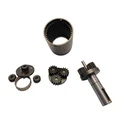
As a direct drive starter supplier, we offer a range of products suitable for different types of generators. For instance, the SVC PWR AWN is a high - performance direct drive starter that is well - suited for medium - sized generators. It provides a balanced combination of torque output and efficiency, ensuring reliable starting for generators in various applications.
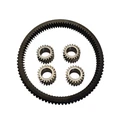
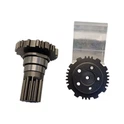
The Bendix Countershaft is another product in our portfolio. It is designed to handle higher starting torques, making it an ideal choice for large - scale industrial generators. Its robust construction and advanced design ensure long - term reliability in demanding environments.
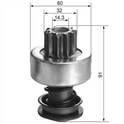
The Starter Motor Gear Bendix Drive is a versatile direct drive starter that can be used in a wide range of generator applications. It offers excellent torque transfer and is known for its durability and ease of maintenance.
Considerations for Selection
When selecting a direct drive starter for a generator, several factors need to be considered:
- Generator Engine Specifications: The power rating, cylinder configuration, and compression ratio of the generator's engine all affect the starting torque requirement. It's essential to choose a starter with a torque output that matches these specifications.
- Operating Environment: The temperature, humidity, and altitude of the operating environment can also impact the performance of the starter. For example, in high - altitude areas, the air density is lower, which may require a more powerful starter to compensate for the reduced engine performance.
- Starting Frequency: If the generator is required to start frequently, a starter with a high - duty cycle should be selected. This ensures that the starter can withstand the repeated starting operations without overheating or suffering premature wear.
Conclusion
In conclusion, a direct drive starter can be effectively used in a generator. It offers numerous benefits such as high efficiency, reliability, and a compact design. However, there are also some potential challenges, such as higher initial cost and the risk of overheating, that need to be addressed. As a direct drive starter supplier, we are committed to providing high - quality products and technical support to help our customers select the most suitable starter for their generator applications.
If you are in the market for a direct drive starter for your generator or have any questions regarding our products, we invite you to contact us for a detailed discussion. Our team of experts will be happy to assist you in making the right choice for your specific needs.
References
- "Generator Handbook" by Thomas H. Martin
- "Automotive Electrical and Electronic Systems" by William H. Crouse and Donald L. Anglin
- Technical documents provided by the direct drive starter manufacturers