As a supplier of Standard Bendix Drives, I've encountered numerous inquiries from customers regarding the suitability of our products in dusty environments. This blog post aims to delve into this crucial question, providing in - depth insights based on scientific knowledge and practical experience.
Understanding the Standard Bendix Drive
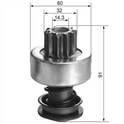
Before we discuss its performance in dusty environments, let's briefly understand what a Standard Bendix Drive is. A Standard Bendix Drive, as described on our Standard Bendix Drive page, is a type of overrunning clutch drive commonly used in starter systems. It plays a pivotal role in transferring torque from the starter motor to the engine's flywheel during the engine starting process. The Bendix Drive consists of a helical spline shaft, a pinion gear, and an overrunning clutch mechanism. When the starter motor is energized, the pinion gear is pushed forward by the helical spline and meshes with the flywheel teeth, allowing the engine to be cranked. Once the engine starts, the overrunning clutch disengages the pinion gear from the flywheel to prevent the starter motor from being driven by the engine.
The Impact of Dust on Mechanical Components
Dust is a common environmental factor that can have a significant impact on the performance and lifespan of mechanical components. In a dusty environment, fine particles of dust can penetrate into the moving parts of a machine, causing several problems. Firstly, dust can act as an abrasive. When it accumulates between the contact surfaces of moving parts, it can cause accelerated wear. For example, in a Bendix Drive, the helical spline and the meshing surfaces of the pinion gear and flywheel are critical areas where dust can cause damage. As the parts move relative to each other, the dust particles can scratch and erode the surfaces, leading to increased friction and reduced efficiency.
Secondly, dust can cause contamination of lubricants. Most mechanical components, including Bendix Drives, rely on lubricants to reduce friction and wear. Dust particles can mix with the lubricant, changing its viscosity and reducing its lubricating properties. This can further exacerbate the wear and tear of the components and may also lead to overheating due to increased friction.
Performance of Standard Bendix Drives in Dusty Environments
The performance of a Standard Bendix Drive in a dusty environment depends on several factors. One of the key factors is the design and construction of the drive. Our Standard Bendix Drives are engineered with high - quality materials and precision manufacturing techniques. The components are designed to withstand a certain level of environmental stress. For instance, the overrunning clutch mechanism is enclosed to some extent to prevent dust from easily entering and interfering with its operation.
However, even with these design features, continuous exposure to a highly dusty environment can pose challenges. Over time, dust may find its way into the internal parts of the drive. The helical spline, which is responsible for the axial movement of the pinion gear, can be affected by dust accumulation. This may cause the pinion gear to move less smoothly, resulting in a less reliable engagement with the flywheel.


In addition, the meshing of the pinion gear and the flywheel can also be compromised. Dust on the gear teeth can lead to uneven loading and increased noise during the starting process. Moreover, if the dust - contaminated lubricant fails to provide adequate protection, the gear teeth may experience premature wear, which can ultimately lead to the failure of the Bendix Drive.
Mitigation Strategies
To enhance the performance of Standard Bendix Drives in dusty environments, several mitigation strategies can be employed. One of the most effective methods is proper sealing. By improving the sealing of the drive, we can significantly reduce the amount of dust that enters the internal components. This can be achieved through the use of high - quality seals and gaskets.
Regular maintenance is also crucial. This includes periodic inspection of the drive for dust accumulation, cleaning of the external surfaces, and replacement of the lubricant at recommended intervals. By keeping the drive clean and well - lubricated, we can minimize the negative effects of dust and extend its service life.
Another approach is to use dust - resistant coatings on the critical components. These coatings can provide an additional layer of protection against abrasion and dust adhesion. They can also help to maintain the smooth operation of the moving parts in a dusty environment.
Real - World Applications and Case Studies
In real - world applications, Standard Bendix Drives are used in various industries where dusty environments are common, such as mining, construction, and agriculture. In the mining industry, for example, equipment is often exposed to high levels of dust generated from the extraction and processing of minerals. Despite the challenging conditions, our Standard Bendix Drives have been able to perform reliably with proper maintenance and the implementation of mitigation strategies.
In a construction site, where there is a lot of dust from excavation and building activities, the starter systems of heavy machinery rely on Bendix Drives. By using sealed drives and following a strict maintenance schedule, the equipment owners have reported fewer starting problems and longer service intervals for the Bendix Drives.
Comparison with Other Starter Drives
When comparing the Standard Bendix Drive with other types of starter drives, such as the Starter Bendix Drive, in dusty environments, the performance characteristics are similar in many aspects. However, the Standard Bendix Drive has its unique design features that may make it more or less suitable depending on the specific application.
The Bendix System, as described on our Bendix System page, is a comprehensive solution that includes the Bendix Drive. It is designed to work in harmony with other components of the starter system to ensure reliable engine starting. In a dusty environment, the overall performance of the Bendix System can be optimized by taking into account the impact of dust on all its components.
Conclusion
In conclusion, while a Standard Bendix Drive can be used in a dusty environment, it requires proper consideration and the implementation of appropriate mitigation strategies. Our company, as a supplier of Standard Bendix Drives, is committed to providing high - quality products and technical support to our customers. We understand the challenges posed by dusty environments and are constantly working on improving the design and performance of our drives.
If you are considering using a Standard Bendix Drive in a dusty environment or have any questions regarding our products, we encourage you to contact us for a detailed discussion. Our team of experts is ready to assist you in selecting the most suitable product and providing guidance on maintenance and operation to ensure optimal performance in your specific application.
References
- "Mechanical Design and Analysis" by Robert L. Norton
- "Handbook of Lubrication and Tribology, Volume I: Application and Maintenance" by Bhushan, Bharat
- Industry reports on starter systems and their performance in harsh environments.