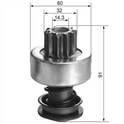
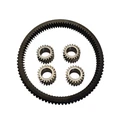
In the automotive and industrial sectors, starter drives play a pivotal role in initiating the engine's operation. However, one of the most persistent challenges they face is vibration. As a seasoned supplier of starter drives, I've witnessed firsthand how these components must be engineered to withstand and adapt to various vibration scenarios. In this blog post, I'll delve into the mechanisms through which starter drives cope with vibration, exploring the design elements, materials, and technologies involved.
Understanding the Impact of Vibration on Starter Drives
Vibration can have a detrimental effect on starter drives if not properly managed. The source of vibrations can vary widely, from the inherent imbalance in the engine itself to road - induced shocks in vehicles. In industrial applications, machinery vibrations can also pose a significant threat. These vibrations, if left unchecked, can lead to premature wear and tear of the starter drive components, such as the gears, bearings, and the overrunning clutch.


Excessive vibration can cause the gears to misalign, leading to uneven tooth contact. This not only reduces the efficiency of power transfer but also increases the likelihood of tooth breakage. Bearings are also highly susceptible to vibration; constant shaking can cause the lubricant to break down, leading to increased friction and eventual bearing failure. Moreover, vibrations can affect the operation of the overrunning clutch, causing it to disengage at the wrong time or not function smoothly.
Design Features for Vibration Resistance
One of the primary ways starter drives cope with vibration is through intelligent design. The shape and structure of the components are carefully engineered to minimize the impact of vibrations. For example, the gears in a starter drive are often designed with specific profiles and tooth geometries. Helical gears, for instance, are commonly used because they provide smoother engagement and disengagement compared to straight - cut gears. The angled teeth of helical gears distribute the load more evenly, reducing the stress concentration that can be caused by vibrations.
Another important design aspect is the mounting system. Starter drives are typically mounted to the engine or machinery in a way that isolates them from excessive vibrations. Rubber or elastomeric mounts are often used to absorb and dampen the vibrations before they reach the starter drive. These mounts act as a buffer, reducing the amplitude of the vibrations and protecting the internal components.
In addition, the housing of the starter drive is designed to be rigid and robust. A well - constructed housing can help to maintain the integrity of the internal components, preventing them from being affected by external vibrations. The housing also provides a protective barrier against dust, dirt, and moisture, which can exacerbate the effects of vibration.
Advanced Materials for Enhanced Vibration Coping
The choice of materials is also crucial in enabling starter drives to cope with vibration. High - strength alloys are commonly used for the gears and other critical components. These alloys offer excellent wear resistance and can withstand the high stresses caused by vibrations. For example, some starter drive gears are made from heat - treated steel, which has a high tensile strength and hardness. This allows the gears to maintain their shape and integrity even under the influence of continuous vibrations.
Bearings in starter drives are often made from materials that can withstand high - frequency vibrations. Ceramic bearings, for instance, are becoming increasingly popular due to their low friction, high hardness, and excellent resistance to wear. They can operate smoothly even in the presence of vibrations, reducing the likelihood of bearing failure.
The overrunning clutch, a vital component of the starter drive, also benefits from advanced materials. Some clutches are made from special composite materials that offer good friction characteristics and high shock resistance. These materials can ensure reliable engagement and disengagement of the clutch, even in a vibrating environment.
Technological Innovations for Vibration Management
In recent years, there have been several technological innovations aimed at improving the ability of starter drives to cope with vibration. One such innovation is the use of vibration sensors and active control systems. These sensors can detect the level and frequency of vibrations in real - time. Based on the data collected, the active control system can adjust the operation of the starter drive to minimize the impact of vibrations. For example, it can modify the engagement speed of the gears or adjust the pressure on the clutch to ensure smooth operation.
Another technological advancement is the development of advanced lubrication systems. Lubricants play a crucial role in reducing friction and wear in starter drives. New lubricants are being formulated to have better vibration - damping properties. These lubricants can form a protective film between the moving parts, reducing the impact of vibrations and preventing metal - to - metal contact.
Our Starter Drive Products and Their Vibration - Coping Capabilities
As a supplier of starter drives, we offer a wide range of products that are designed to cope with vibration effectively. Our Starter Bendix Replacement is engineered with high - precision gears and a robust housing. The gears are made from a special alloy that provides excellent wear resistance, even in the presence of vibrations. The housing is designed to be rigid, protecting the internal components from external shocks and vibrations.
Our Standard Bendix Drive features a unique mounting system that uses rubber mounts to isolate the drive from the engine vibrations. This ensures smooth operation and reduces the risk of premature wear. The overrunning clutch in this drive is made from a high - performance composite material that offers reliable engagement and disengagement, even under vibrating conditions.
The Starter Motor Bendix in our product line is equipped with ceramic bearings. These bearings can withstand high - frequency vibrations, providing long - term reliability and smooth operation. The gears in the starter motor bendix are helical, which helps to distribute the load evenly and reduce the impact of vibrations.
Our Car Starter Replacement is designed to meet the specific vibration requirements of automotive applications. It uses advanced lubrication technology to reduce friction and wear caused by vibrations. The housing is sealed to prevent dust and moisture from entering, further protecting the internal components from the adverse effects of vibrations.
The Self Starter Bendix in our portfolio is engineered with a smart control system. This system can detect vibrations and adjust the operation of the starter drive accordingly, ensuring optimal performance in all conditions.
Conclusion and Call to Action
In conclusion, starter drives face significant challenges when it comes to coping with vibration. However, through intelligent design, the use of advanced materials, and technological innovations, these challenges can be effectively overcome. Our company is committed to providing high - quality starter drives that are capable of withstanding the rigors of vibration.
If you're in the market for reliable starter drives that can cope with vibration, we invite you to reach out to us for procurement discussions. Our team of experts is ready to assist you in finding the right starter drive solution for your specific needs.