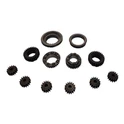
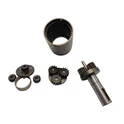
Hey there! As a supplier of Starter Planetary Gear Reduction, I've seen firsthand how crucial it is to pick the right one for your needs. In this blog, I'll walk you through the key factors to consider when making this important decision.
First things first, let's talk about what a Starter Planetary Gear Reduction is. A Starter Planetary Gear is a type of gear system that uses multiple gears arranged in a planetary configuration to achieve a specific gear reduction ratio. The Starter Planetary Gear Reduction is an assembly that incorporates these planetary gears to provide the desired speed and torque output.
Now, let's get into the nitty - gritty of choosing the right one.
Torque Requirements
One of the most important factors is the torque your application needs. Torque is basically the rotational force required to operate your machinery. If you don't have enough torque, your machine won't work properly. On the other hand, if you choose a gear reduction with too much torque capacity, you're likely wasting money. So, figure out the maximum torque your application will experience. This involves looking at the load you're trying to move, the speed at which you need to move it, and any other forces acting on the system. For example, if you're using the gear reduction in a heavy - duty industrial conveyor, you'll need a much higher torque capacity compared to a small - scale automated door system.
Speed Requirements
Speed is another critical aspect. You need to know the input speed (the speed at which power is supplied to the gear reduction) and the output speed (the speed you want at the end of the gear reduction). The gear reduction ratio is what determines the relationship between these two speeds. A higher gear reduction ratio will result in a lower output speed but higher torque, and vice versa. So, based on your application's requirements, calculate the appropriate gear reduction ratio. For instance, in a wind turbine, the input speed from the wind blades is relatively low, but you might need a higher output speed to generate electricity efficiently. So, you'll need to select a Starter Planetary Gear Reduction with a suitable ratio.
Efficiency
Efficiency matters a great deal. An efficient Gear Reduction System will waste less energy in the form of heat and friction. When a gear reduction is inefficient, it not only consumes more power but also generates more heat, which can lead to premature wear and tear. Look for gear reductions with high - quality materials and precision manufacturing. For example, gears made from high - grade steel and with proper heat - treatment are more likely to be efficient. Also, consider the lubrication system. A well - lubricated gear reduction will operate more smoothly and efficiently.
Size and Space Constraints
You've got to think about where you're going to install the Starter Planetary Gear Reduction. If you're working in a tight space, you can't afford to pick a bulky one. Measure the available space carefully and look for a gear reduction that fits within those dimensions. Some applications, like in automotive engines or small robotics, have very limited space, so you'll need a compact and lightweight design. However, don't sacrifice performance for size. There are many high - performance, compact Starter Planetary Gear Reductions available in the market.
Durability and Reliability
Your equipment needs to run for a long time without breaking down. So, durability is key. Check the construction materials, the manufacturing quality, and the reputation of the brand. A well - built Starter Planetary Gear Reduction made from strong materials can withstand high loads, vibrations, and harsh operating conditions. It's also important to look for features like proper sealing to prevent dirt and debris from entering the gear system. For example, if you're using the gear reduction in a mining or construction application, it will be exposed to a lot of dust and rough conditions, so it needs to be extra durable.
Maintenance Requirements
Nobody wants to spend a fortune on maintenance. Some gear reductions require frequent oil changes, inspections, and part replacements. Others are designed to be low - maintenance. Consider the maintenance schedule and the ease of maintenance. For example, a gear reduction with easy - access lubrication points and simple disassembly for inspection will be much more convenient. Also, think about the availability of spare parts. If you can't easily get replacement parts when something goes wrong, it could lead to long downtimes.
Cost
Last but not least, cost is a major consideration. You don't want to overspend, but at the same time, you don't want to go for the cheapest option that might end up failing prematurely. Compare the prices of different Starter Planetary Gear Reductions based on the features and performance they offer. It's often a good idea to look at the total cost of ownership, which includes not only the purchase price but also the cost of maintenance, energy consumption, and potential downtime.


In conclusion, choosing the right Starter Planetary Gear Reduction is all about balancing these factors based on your specific application. It's a process that requires a bit of research and understanding. If you're still unsure or have more questions about which Starter Planetary Gear Reduction is right for your needs, don't hesitate to reach out. We're here to help you make the best choice. Whether you're in the industrial, automotive, or any other sector, we've got the expertise and the products to meet your requirements. Start the conversation with us and let's find the perfect gear reduction for your project.