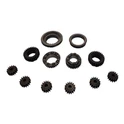
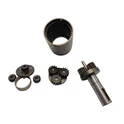
As a Bendix system supplier with over a decade of experience supporting automotive, heavy-duty truck, and agricultural equipment operators, I've lost count of how many customers have asked me: "What's the real maintenance requirement for the Bendix System?" Too often, people write off this critical component as a "set-it-and-forget-it" part of their starter motor assembly, only to face frustrating breakdowns in extreme conditions-like a farm tractor failing to fire up at 2 a.m. during harvest season, or a delivery truck stalling mid-route because the Bendix drive stuck in the flywheel. The reality is, Bendix systems aren't maintenance-free, but their upkeep doesn't have to be complicated. It's about consistent, targeted checks that align with how you operate your equipment, not a one-size-fits-all overhaul.
First, let's ground this in what the Bendix system actually does, because maintenance can't be effective if you don't understand its core function. The Bendix drive is the overrunning clutch component that physically engages the starter motor's pinion gear with the engine's flywheel ring gear during cranking, then disengages instantly once the engine starts-this is what protects the starter motor from being destroyed by the flywheel's high speed. It's a deceptively simple part: think of it as a spring-loaded gear with one-way clutch action, built to handle thousands of cranking cycles. But because it's in constant contact with metal-on-metal movement, it's prone to wear that builds gradually until it causes a failure.


Let's start with routine maintenance: the checks you should do every 50 to 100 operating hours, or at every scheduled oil change (whichever comes first, and adjust for your environment). For light-duty passenger vehicles, that's usually every 3,000 to 5,000 miles; for heavy-duty trucks or farm equipment, that might be every 20 to 40 hours of operation. The key here is visual and functional checks, no disassembly required.
First, inspect the Bendix drive's pinion gear teeth for damage. You'd be surprised how often small, subtle tooth wear is missed-like tiny chips, rounded edges, or even minor corrosion on the gear's contact points. When these imperfections build up, the Bendix struggles to align with the flywheel, leading to grinding noises during cranking. That grinding isn't just annoying; it's a leading cause of flywheel ring gear replacement, which is a far more expensive repair than addressing the Bendix early. I recommend pulling back the starter motor's dust cover (most modern starters have one, and it's easy to pop off with a flathead screwdriver) to check the pinion. For our customers looking for replacement components at this stage, the 8n Starter Bendix is a popular fit for many classic and light-duty applications, with precision-machined teeth that resist wear far longer than generic aftermarket parts.
Next, check the spring that retracts the Bendix pinion after cranking. This spring is under constant tension, and over time, it can lose tension or become coated with grime from engine oil and road dust. If the spring is weak, the Bendix won't retract fully once the engine starts-staying engaged with the flywheel, which turns the starter motor at thousands of RPM and burns out the armature almost instantly. A quick functional test here: when you turn the ignition to start, listen for how the Bendix engages. A smooth, single "click" as the pinion locks, followed by a quick disengagement, is ideal. If you hear multiple clicks or a grinding sound after the engine starts, that's a sign the spring is failing. At this point, many customers opt for a complete Bendix Drive Assembly instead of just replacing the spring, because replacing the assembly is often simpler and ensures all components (clutch, pinion, spring) are uniform and in good condition.
For medium-term maintenance, that's the more in-depth inspection every 200 to 300 operating hours, or every 10,000 to 15,000 miles for light-duty vehicles, and every 100 hours for heavy equipment. This is when you'll want to remove the starter motor from the vehicle to do a full inspection of the Bendix system inside the motor housing. Once the starter is out, you can slide the Bendix drive off the starter shaft (be gentle-these components are precision-machined, and forcing them can damage the one-way clutch).
The first thing to check here is the one-way clutch action. This is the heart of the Bendix system: it should spin freely in one direction (to engage with the flywheel) and lock tight in the other (so the starter can turn the flywheel without the Bendix slipping). If the clutch slips in both directions, that means the rollers or bearings inside the clutch are worn or damaged, and the Bendix won't transfer enough torque to crank the engine. This is a common issue in equipment that's used in cold weather, where thick engine oil can build up inside the clutch and prevent it from engaging properly. For applications where the Bendix faces higher torque loads-like a 3/4-ton pickup or a semi-truck-many of our customers rely on the Starter Motor Drive Bendix line, designed with hardened steel rollers to handle higher torque without slipping.
While the Bendix is off the starter shaft, clean all components thoroughly. I always use a non-residue parts cleaner and a soft-bristle brush (a toothbrush works great for small parts) to remove old grease, grime, and metal shavings. Residual metal shavings are a big red flag-they're from wear on the pinion or flywheel teeth, and if left, they'll cause more damage to the Bendix and the starter motor's armature. Once everything is clean, re-lubricate the Bendix components with a high-temperature, lithium-based grease-never use general-purpose grease, as it can break down at the high temperatures around the starter motor. Too little grease, and parts wear quickly; too much grease, and it can attract more grime. The goal is a thin, even coating that allows the Bendix to slide smoothly on the starter shaft.
One point I can't stress enough: pay attention to the environment your equipment operates in, because that changes maintenance requirements drastically. If you're running a fleet of delivery trucks in a city with stop-and-go traffic, your Bendix systems are cycling on and off hundreds of times a day, so you should do those 50-hour visual checks every week, not every oil change. If you're running farm equipment in dusty, muddy conditions, corrosion from mud and debris is a top risk, so adding a quick spray of silicone lubricant to the Bendix pinion every 100 hours can help keep it from seizing. For equipment that sits unused for long periods-like a boat trailer's truck or a classic car stored over winter-pull the starter out, clean the Bendix, lubricate it, and store it in a dry area to prevent corrosion. I've seen too many customers wait until spring to start their tractor, only to find the Bendix pinion is rusted solid because they didn't store it properly.
Now, when is it time to replace a Bendix system, versus just servicing it? That's a question I get every day. Minor wear on the pinion teeth or spring tension can be addressed with cleaning and lubrication, but if you notice: rounded pinion edges, a clutch that slips even after cleaning, a spring that's loose or stretched, or grinding that happens every time you crank the engine, it's time for replacement. Many customers come to us when their old Bendix is worn out, and they're looking for a direct fit. For example, the 11 Tooth Starter Bendix is a perfect replacement for many compact trucks and older passenger vehicles, with a tooth count that matches the original equipment, so no modifications are needed. We also stock the Starter Bendix Replacement line for a wide range of applications, from small lawn tractors to heavy-duty semi-trucks, so customers don't have to hunt for a part that fits their specific make and model.
A common mistake I see is customers waiting until the Bendix fails entirely to replace it. By the time the Bendix stops working, it's almost always caused secondary damage to the flywheel ring gear or the starter motor armature, which adds hundreds of dollars to the repair cost. Proactive maintenance, though, can add years to the life of your Bendix system. Last year, we worked with a small trucking fleet that switched from unbranded Bendix parts to our components, and their Bendix-related breakdowns dropped by 75% over 12 months-saving them thousands in downtime and repair costs. The key was following a consistent maintenance schedule tailored to their stop-and-go delivery routes, instead of only servicing parts when they broke.
Another point: when you do replace a Bendix system, take the time to inspect the flywheel ring gear while you're at it. The Bendix and the flywheel work together, so if the flywheel has worn teeth or corrosion, the new Bendix will wear out much faster. It's a small extra step that prevents repeat problems down the line.
For anyone managing a fleet or running heavy equipment, keeping track of Bendix maintenance is part of a larger preventive maintenance plan. Logging when you check and service each Bendix, noting things like tooth wear or spring tension, helps you spot trends-like if a certain make of truck is having more Bendix issues in cold weather, or if a particular model of farm equipment is showing higher wear than others. That data lets you adjust your maintenance schedule, choose the right parts, and avoid unexpected downtime on the job.
At the end of the day, the maintenance requirements for the Bendix system are straightforward: consistent, environment-aware checks, timely cleaning and lubrication, and proactive replacement when wear is detected. It's not a complicated system, but it's critical-so skimping on maintenance isn't worth the risk of a breakdown.
If you're a fleet manager, equipment owner, or mechanic looking for reliable Bendix components to keep your operations running smoothly, we're here to help. Whether you need a specific fit like the 8n Starter Bendix, a full Bendix Drive Assembly, or guidance on which parts work best for your equipment, our team can support your needs. Contact us to discuss your Bendix system requirements and source the right components for your application.