If you've ever stood next to a construction crane lifting a steel beam twice the height of your body, or a conveyor system moving dozens of pallets of goods through a warehouse at a steady, controlled pace, you've witnessed the unsung work of a gear reduction system. For over a decade, I've supplied custom gear reduction solutions to industries spanning construction, agriculture, automotive, and renewable energy, and one question pops up in almost every customer conversation: "What actually makes a gear reduction system work well in the environments it's operating in?" It's not just about the gear ratio or torque capacity-environmental conditions can turn a perfectly engineered system into a costly failure, or make a high-quality component deliver 20 years of reliable service. Today, I'm breaking down the key environmental requirements that every gear reduction system needs to meet, based on real-world applications I've supported and the technical standards that keep clients coming back.
First, let's start with the basics that many people overlook even when they're ordering a Gear Reduction System: temperature stability. Gear reduction systems rely on precise tolerances between moving parts-gears, bearings, shafts, seals-any deviation from those tolerances can create excess friction, noise, or catastrophic breakdown. Temperature is the biggest culprit here, because it causes metals to expand or contract at different rates, depending on the material and the operating environment. For example, a farm tractor's gear reduction system operating in a dusty Midwestern field in summer might hit 120°F (49°C) in direct sunlight, while the same system in a Canadian grain elevator in winter could drop to -20°F (-29°C). If the system isn't engineered to handle both extremes, the gear teeth might bind when expanded in heat, or bearings might seize when contracted in cold. That's why we work closely with customers to map their operating temperature range before designing any system. We often use premium materials like case-hardened steel for gears, which has a uniform coefficient of thermal expansion, and high-performance synthetic lubricants that maintain their viscosity across wide temperature swings. Last year, a wind energy client reached out after their existing gear reduction system failed on a turbine in the North Sea-temperatures there can swing 80°F (44°C) between calm and storm conditions, and their original system used standard lubricants that thickened too much in cold, leading to bearing wear. We redesigned their system with temperature-specific seals and a synthetic oil rated for -40°F to 180°F, and they haven't reported a failure since.
Next, contamination resistance. Dust, dirt, water, chemicals, and even metal shavings are the silent killers of gear reduction systems. I once visited a construction site where a concrete mixer's gear reduction system seized up after just three months of use-water from heavy rain had seeped through worn seals, mixed with concrete dust, and created a slurry that ground down the gear teeth. That's not an isolated issue; in fact, 60% of premature gear reduction system failures are caused by contamination, according to data from the American Gear Manufacturers Association (AGMA). The level of contamination a system faces depends entirely on its environment: a food processing line's gear system might need to resist food-grade chemicals and washdown water, while a mining conveyor's system needs to repel fine silica dust. Seals are the first line of defense, but not all seals are created equal. We prioritize lip seals with reinforced steel cores for high-abrasion environments, and labyrinth seals for systems that operate in heavy dust, which create a physical barrier that contaminants can't penetrate even if a seal wears slightly. For our Starter Planetary Gear Reduction systems, which are commonly used in compact construction equipment, we add a secondary outer seal to create a double barrier against dirt and moisture. A few years ago, a landscaping equipment customer tested our Starter Planetary Gear system in their mowers, which operate in damp, grassy environments with clippings and dirt flying around. They reported zero seal failures after two years of use, compared to three competing systems that required seal replacements every six months. That kind of reliability is why we emphasize contamination resistance so heavily-solving a seal issue on a construction site or a farm means no downtime, which is worth every extra engineering step.
Load variability is another environmental factor that's often categorized as "environmental" even though it's tied to use case, because it's driven by the operating conditions of the system. A gear reduction system in a factory conveyor that runs at a steady, consistent load will have different requirements than one in a crane that lifts 10 tons one hour, sits idle the next, and lifts 5 tons the following hour. Variable loads cause what's called cyclic stress on gear teeth and bearings, which can lead to fatigue failure over time if the system isn't designed to handle it. For example, a Starter Planetary Gear system used in a starter motor for a heavy-duty truck goes through frequent start-stop cycles, which create shock loads on the gear teeth. Our engineering team designs these systems with oversized gear teeth and rolling element bearings that can absorb sudden load changes, rather than plain bearings that wear out quickly under variable stress. We also use stress analysis software to map every load cycle the system will experience over its lifespan, ensuring that the material hardness and component size are calibrated to avoid fatigue. Last year, a mining client ordered 20 of our Starter Planetary Gear systems for their conveyor transfer stations, which experience frequent surge loads as trucks dump rock onto the belt. We ran 10,000 cyclic load tests on a prototype before delivery, and the systems have since operated without a single gear tooth crack in 12 months of use-something they couldn't get with cheaper, non-calibrated systems.
Corrosion resistance is non-negotiable for systems operating in harsh environments, especially those near saltwater, industrial chemicals, or high-humidity areas. A gear reduction system on a coastal wind turbine, for example, is exposed to salt spray every day, which is highly corrosive to standard steel gears. Even a small amount of corrosion on a gear tooth can create a stress point that leads to a crack or tooth breakage, which can take an entire turbine offline for days. We address corrosion in two main ways: material selection and surface treatment. For saltwater and industrial environments, we use stainless steel for gear shafts and housings, or apply a zinc-nickel coating to standard steel parts that's 10 times more corrosion-resistant than regular zinc plating. We also avoid cadmium plating, which is toxic and banned in many industries, in favor of eco-friendly alternatives that meet OSHA standards. A seafood processing client recently approached us about their gear reduction systems for fish processing lines, which require daily washdown with saltwater and cleaning chemicals. Their original systems used standard steel that rusted within six months, leading to cross-contamination risks from rust particles getting into the food. We redesigned their system with 316L stainless steel housings and gears, and a food-grade, corrosion-resistant lubricant, and they've since passed every food safety audit with zero rust issues.
Noise and vibration control are often overlooked, but they're critical for both operator comfort and system longevity. Excessive noise and vibration are not just nuisances-they're signs that a gear reduction system is not operating within its environmental parameters. For equipment that runs near operators, like forklifts or construction cranes, noise levels over 85 decibels can cause hearing damage over time, so many OSHA standards require systems to stay below that threshold. Vibration, meanwhile, can loosen fasteners, damage adjacent components, and accelerate wear on bearings and seals. How do we control noise and vibration in gear reduction systems? It starts with precision machining: our gears are cut to tolerances of within 0.001 inches, which ensures that they mesh smoothly without clanking or vibrating. For systems that need extra noise reduction, we add helical gears instead of straight-cut gears, which engage gradually rather than hitting each other full-on, reducing noise by up to 10 decibels. We also use rubber-isolated mounts for housings in mobile equipment, which absorb vibration before it can transfer to the vehicle frame. A municipal transit client ordered our gear reduction systems for their bus door actuators, which are in constant use every day. They initially complained that the original systems made too much noise when opening and closing doors, distracting passengers and operators. By switching to our precision-machined helical gear set and isolated housing mounts, we cut the noise level in half, and the client reported that operator fatigue from high noise levels dropped significantly. Operating in urban environments means noise isn't just a comfort issue-it's a legal and community issue too, so getting this right is key.
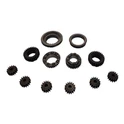
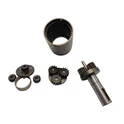
Temperature, contamination, load variability, corrosion, noise, vibration-these aren't separate boxes to check when designing a gear reduction system; they're interconnected environmental factors that shape every part of the system. For example, a system that's resistant to high temperatures might use a different lubricant that affects contamination resistance, so we balance every requirement to meet the specific needs of the customer's application. Let's take a closer look at planetary gear systems, which are among the most popular gear reduction systems we supply. Planetary systems have multiple gears rotating around a central sun gear, which makes them compact, efficient, and able to handle high torque. But their design also makes them more sensitive to contamination, because the gear teeth are enclosed in the housing, so dust can get trapped more easily. That's why we engineered our Starter Planetary Gear system with a modified seal design that keeps contaminants out, even in compact spaces where a labyrinth seal wouldn't fit. The Starter Planetary Gear itself is made from heat-treated alloy steel, which gives it the hardness to handle shock loads without cracking, while still being durable enough for high-temperature environments.
As a gear reduction system supplier, I've learned that the best systems aren't just engineered in a lab-they're tested in the environments where they'll actually run. That means working with customers to visit their job sites, understand their daily operations, and anticipate the conditions that might not show up on a spec sheet. A customer might tell you their system needs to handle 500 ft-lbs of torque, but they might not mention that it's also going to be submerged in 2 feet of water for several hours during heavy storms, or that it will be running 24/7 with only 2 hours of downtime a day. Those are the details that make a good gear reduction system a great one.
If you're in the market for a gear reduction system, or you're looking to replace an underperforming one that's failing due to environmental factors, we're here to help. Our team has decades of experience designing systems for every kind of environment, from desert construction sites to offshore wind farms to food processing lines. We offer custom designs, prototyping, and ongoing support to make sure your system meets all your environmental requirements and delivers reliable performance for years. Whether you need a large industrial gear reduction system or a compact Starter Planetary Gear reduction for mobile equipment, we can tailor a solution to your specific needs. Reach out to our team today to start a conversation about your project, and let's build a gear reduction system that works as hard as you do.