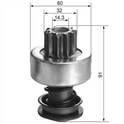
Diagnosing a bad Bendix Drive Assembly is a crucial skill, especially for those in the automotive and machinery industries. As a supplier of Bendix Drive Assemblies, I've encountered numerous situations where customers need to identify issues with these components. In this blog, I'll share some practical steps and tips on how to diagnose a faulty Bendix Drive Assembly.
Understanding the Bendix Drive Assembly
Before delving into the diagnostic process, it's essential to understand what a Bendix Drive Assembly is and how it functions. The Bendix Drive Assembly is a key part of a starter motor. Its primary role is to engage the flywheel of an engine when the starter motor is activated, allowing the engine to start. Once the engine starts, the Bendix Drive disengages to prevent damage to the starter motor and the flywheel.
Signs of a Bad Bendix Drive Assembly
- Noisy Operation
One of the most common signs of a bad Bendix Drive Assembly is excessive noise during engine starting. If you hear a grinding, whining, or rattling sound when you turn the ignition key, it could indicate a problem with the Bendix Drive. This noise may be caused by worn teeth on the drive gear, a misaligned drive, or a damaged overrunning clutch. - Failure to Engage
If the starter motor spins, but the engine doesn't crank, it's likely that the Bendix Drive Assembly is not engaging properly with the flywheel. This could be due to a variety of reasons, such as a stuck drive, a weak solenoid, or a damaged drive gear. - Continuous Engagement
In some cases, the Bendix Drive Assembly may fail to disengage after the engine starts. This can cause the starter motor to continue running, leading to overheating and potential damage to the starter motor and the flywheel. Continuous engagement can be caused by a faulty overrunning clutch or a misadjusted solenoid. - Slow Cranking
A bad Bendix Drive Assembly can also cause the engine to crank slowly. This may be due to a worn drive gear, a weak overrunning clutch, or a problem with the electrical connection between the starter motor and the battery.
Diagnostic Steps
- Visual Inspection
The first step in diagnosing a bad Bendix Drive Assembly is to perform a visual inspection. Check the drive gear for signs of wear, such as chipped or broken teeth. Look for any signs of damage or misalignment on the drive shaft and the overrunning clutch. Also, inspect the solenoid for any visible damage or loose connections. - Testing the Solenoid
The solenoid is an important component of the Bendix Drive Assembly, as it is responsible for engaging and disengaging the drive. To test the solenoid, you'll need a multimeter. First, disconnect the battery to prevent any electrical shock. Then, remove the solenoid from the starter motor and connect the multimeter to the solenoid terminals. Set the multimeter to the resistance setting and measure the resistance between the terminals. If the resistance is outside the specified range, the solenoid may be faulty and need to be replaced. - Checking the Overrunning Clutch
The overrunning clutch is designed to allow the drive gear to engage the flywheel when the starter motor is activated and to disengage when the engine starts. To check the overrunning clutch, you can use a simple test. First, remove the Bendix Drive Assembly from the starter motor. Then, rotate the drive gear in the forward direction. It should rotate freely. Next, try to rotate the drive gear in the reverse direction. It should lock up and not rotate. If the overrunning clutch does not lock up in the reverse direction, it is likely faulty and needs to be replaced. - Testing the Drive Gear
The drive gear is another critical component of the Bendix Drive Assembly. To test the drive gear, you can use a micrometer to measure the diameter of the gear teeth. Compare the measurements to the manufacturer's specifications. If the gear teeth are worn beyond the acceptable limit, the drive gear needs to be replaced. - Electrical Testing
In addition to the mechanical components, it's also important to test the electrical connections of the Bendix Drive Assembly. Use a multimeter to check the voltage at the starter motor terminals. Make sure the battery is fully charged and the electrical connections are clean and tight. If there is a significant voltage drop, it could indicate a problem with the wiring or the battery.
Common Causes of Bendix Drive Assembly Failure
- Wear and Tear
Over time, the components of the Bendix Drive Assembly can wear out due to normal use. The drive gear teeth can become worn, the overrunning clutch can lose its ability to engage and disengage properly, and the solenoid can fail. Regular maintenance and inspection can help prevent premature wear and tear. - Contamination
Contamination from dirt, debris, or oil can also cause problems with the Bendix Drive Assembly. Dirt and debris can get into the drive gear and the overrunning clutch, causing them to jam or wear out more quickly. Oil can also damage the electrical components of the solenoid. - Improper Installation
Improper installation of the Bendix Drive Assembly can lead to a variety of problems. If the drive is not properly aligned with the flywheel, it can cause excessive noise and wear. If the solenoid is not installed correctly, it may not function properly.
Solutions and Replacement
If you've diagnosed a bad Bendix Drive Assembly, there are several options for repair or replacement. In some cases, you may be able to replace individual components, such as the drive gear or the overrunning clutch. However, in most cases, it's recommended to replace the entire Bendix Drive Assembly to ensure proper functionality and reliability.
As a supplier of Bendix Drive Assemblies, we offer a wide range of high - quality products, including Bendix Countershaft, Drive and Shaft ASM, and 8n Starter Bendix. Our products are designed to meet or exceed the original equipment manufacturer (OEM) specifications, ensuring reliable performance and long - lasting durability.
Conclusion
Diagnosing a bad Bendix Drive Assembly requires a combination of visual inspection, mechanical testing, and electrical testing. By following the steps outlined in this blog, you can identify the root cause of the problem and take appropriate action. Whether you need to replace individual components or the entire Bendix Drive Assembly, we are here to provide you with the high - quality products and support you need.


If you're in the market for a Bendix Drive Assembly or have any questions about diagnosing or replacing these components, please don't hesitate to contact us for a purchase negotiation. We look forward to serving you and helping you keep your engines running smoothly.
References
- Automotive Repair Manuals.
- Manufacturer's Technical Documentation for Bendix Drive Assemblies.