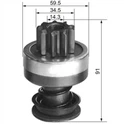
As a Bendix Drive Assembly supplier, ensuring the quality and performance of our products is of utmost importance. Testing a Bendix Drive Assembly thoroughly is a critical process that guarantees its reliability in various applications. In this blog, I'll share a comprehensive guide on how to test a Bendix Drive Assembly.
Understanding the Bendix Drive Assembly
Before we delve into the testing process, it's essential to have a basic understanding of the Bendix Drive Assembly. The Starter Bendix Drive is a crucial component in a vehicle's starting system. It is responsible for engaging the starter motor's pinion gear with the engine's flywheel ring gear when the ignition key is turned. Once the engine starts, the Bendix Drive disengages the pinion from the flywheel to prevent damage to the starter motor.
The Starter Bendix Drive Clutch within the assembly plays a key role in allowing the pinion to rotate freely in one direction (when the starter motor turns it) and lock in the other direction (to transfer torque to the flywheel). The Bendix System as a whole is designed to provide a smooth and efficient starting mechanism.
Pre - Testing Checks
Visual Inspection
- Examine for Physical Damage: Carefully look at the Bendix Drive Assembly for any signs of physical damage such as cracks, broken teeth on the pinion gear, or bent components. A damaged pinion gear may not engage properly with the flywheel, leading to starting problems.
- Check for Wear: Inspect the surfaces of the pinion gear and the clutch components for excessive wear. Worn - out parts can cause slippage and reduce the efficiency of the starting system.
- Verify Component Integrity: Ensure that all the parts of the assembly are securely attached and there are no loose or missing components. This includes checking the fasteners, springs, and bearings.
Cleaning
- Remove Dirt and Debris: Use a suitable cleaning agent and a brush to clean the Bendix Drive Assembly. Dirt and debris can interfere with the proper functioning of the components and may cause premature wear.
- Dry Thoroughly: After cleaning, make sure the assembly is completely dry before proceeding with further testing. Moisture can lead to corrosion and electrical problems.
Testing the Bendix Drive Assembly
Bench Testing the Pinion Gear Engagement
- Set Up the Test Rig: You can create a simple test rig using a power source, a motor to mimic the starter motor, and a flywheel - like component. Connect the Bendix Drive Assembly to the motor and position the flywheel component at an appropriate distance.
- Apply Power: When power is applied to the motor, the Bendix Drive should engage the pinion gear with the flywheel. Observe if the engagement is smooth and immediate. If there is a delay or the pinion fails to engage, it could indicate a problem with the solenoid or the gear mechanism.
- Check for Disengagement: After a short period, the Bendix Drive should disengage the pinion from the flywheel when the power is cut off. Any failure to disengage can cause damage to the starter motor and the flywheel.
Testing the Overrunning Clutch
- Manual Rotation Test: With the Bendix Drive Assembly removed from the test rig, manually rotate the pinion gear in both directions. The pinion should rotate freely in one direction (the direction of normal engine rotation) and lock in the other direction. If the clutch does not lock or slips in the locked direction, it is defective and needs to be replaced.
- Torque Testing: Use a torque wrench to measure the torque required to turn the pinion gear in the locked direction. Compare the measured torque with the manufacturer's specifications. If the torque is too low or too high, it indicates a problem with the clutch.
Electrical Testing
- Solenoid Testing: The solenoid in the Bendix Drive Assembly is responsible for engaging and disengaging the pinion gear. Use a multimeter to check the electrical continuity of the solenoid coil. A broken coil will prevent the solenoid from functioning properly.
- Voltage Drop Test: Measure the voltage drop across the solenoid when it is energized. A high voltage drop can indicate a poor electrical connection or a faulty solenoid.
Testing in a Real - World Application
Installation in a Vehicle
- Proper Installation: Install the Bendix Drive Assembly in a vehicle according to the manufacturer's instructions. Make sure all the electrical connections are secure and the assembly is properly aligned.
- Start the Vehicle: Turn the ignition key and observe the starting process. Listen for any abnormal noises such as grinding or clicking sounds, which can indicate problems with the Bendix Drive.
- Multiple Starts: Perform multiple start - stop cycles to ensure the reliability of the Bendix Drive Assembly. If any issues arise during these tests, the assembly should be removed and re - tested or replaced.
Documentation and Quality Control
Recording Test Results
- Create a Test Report: Document all the test results, including visual inspection findings, bench test results, electrical test readings, and real - world application test observations. This report can be used for quality control purposes and as a reference for future troubleshooting.
- Maintain a Database: Keep a database of all the tested Bendix Drive Assemblies, including their serial numbers, test dates, and test results. This will help in tracking the performance of different batches and identifying any recurring issues.
Quality Assurance Checks
- Random Sampling: Conduct random sampling of the Bendix Drive Assemblies during production and perform the same set of tests. This ensures that the overall quality of the products remains consistent.
- Compliance with Standards: Ensure that all the tested assemblies meet the relevant industry standards and specifications. This may include standards related to torque, durability, and electrical performance.
Conclusion
Testing a Bendix Drive Assembly is a multi - step process that requires attention to detail and the use of appropriate testing equipment. By following the steps outlined in this blog, we can ensure that our Bendix Drive Assemblies are of the highest quality and reliable in real - world applications.
If you are in the market for high - quality Bendix Drive Assemblies or have any questions about our products, we welcome you to engage in procurement discussions with us. Our team is dedicated to providing you with the best solutions for your starting system needs.
References
[1] Automotive Starter Systems Manual. Publisher: ABC Publishing.
[2] Technical Guide to Bendix Drive Components. Manufacturer: XYZ Corporation.