


As a supplier of Inertia Drive Starters, I am often asked about the components that make up these essential devices. Inertia Drive Starters play a crucial role in starting internal combustion engines, and understanding their components is key to appreciating their functionality and reliability. In this blog post, I will delve into the various components of an Inertia Drive Starter and explain how they work together to initiate the engine's operation.
Armature
The armature is the rotating part of the starter motor. It consists of a shaft with a series of coils wound around it. When an electrical current is applied to these coils, a magnetic field is created. This magnetic field interacts with the magnetic field of the stator, causing the armature to rotate. The armature's rotation is then transferred to the pinion gear, which engages with the engine's flywheel to start the engine. The design and construction of the armature are critical for efficient power transfer and reliable operation. High - quality materials are used to ensure that the armature can withstand the high - speed rotation and electrical currents involved.
Stator
The stator is the stationary part of the starter motor. It contains a set of permanent magnets or field coils. The purpose of the stator is to create a magnetic field that interacts with the magnetic field of the armature. When the armature rotates within the magnetic field of the stator, an electromotive force is generated, which causes the armature to turn. The stator's magnetic field is carefully designed to provide the right amount of force to rotate the armature at the necessary speed. Different types of stators may be used depending on the specific requirements of the starter motor, such as power output and size constraints.
Pinion Gear
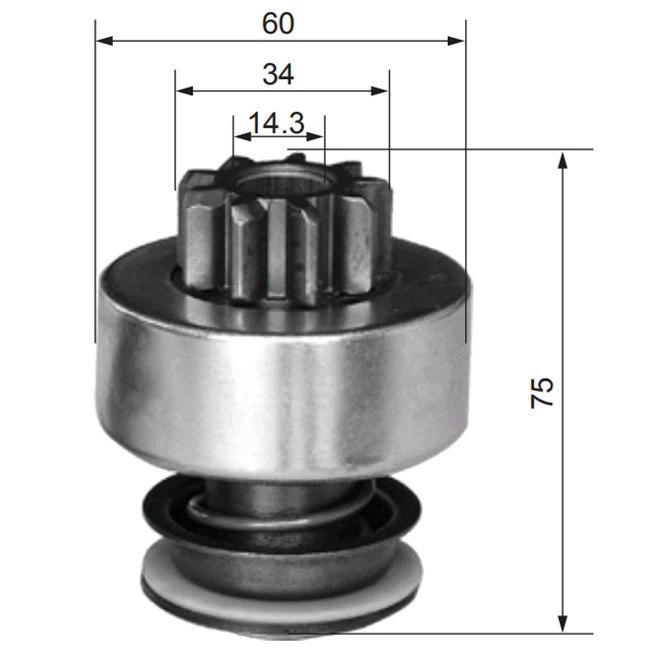
The pinion gear is a small, toothed gear that is attached to the end of the armature shaft. Its main function is to engage with the ring gear on the engine's flywheel. When the starter motor is activated, the pinion gear is pushed forward to mesh with the flywheel's ring gear. Once engaged, the rotation of the armature is transferred to the flywheel, which in turn starts the engine. The pinion gear must be made of a strong and durable material to withstand the high - impact forces during engagement and the continuous meshing with the flywheel. Proper alignment and clearance between the pinion gear and the ring gear are also essential for smooth operation.
Overrunning Clutch
The overrunning clutch is a critical component in an Inertia Drive Starter. It allows the pinion gear to engage with the flywheel when the starter motor is turning, but it prevents the engine from driving the starter motor once the engine has started. This is important because if the engine were to drive the starter motor, it could cause damage to the starter. The overrunning clutch typically consists of a series of sprags or rollers that allow the pinion gear to rotate in one direction (when the starter motor is engaged) but lock up and prevent rotation in the opposite direction (when the engine is running). There are different types of overrunning clutches available, each with its own advantages and applications.
Solenoid
The solenoid is an electromagnetic switch that is used to control the operation of the starter motor. When the ignition key is turned, an electrical current is sent to the solenoid. The solenoid then uses this electrical energy to create a magnetic field, which moves a plunger. The movement of the plunger performs two main functions: it engages the pinion gear with the flywheel and it connects the starter motor to the battery, providing the necessary electrical power to start the engine. Solenoids are designed to be reliable and durable, as they are subjected to repeated use every time the engine is started.
Drive Lever
The drive lever is a mechanical component that is connected to the solenoid's plunger. When the solenoid is activated, the movement of the plunger is transferred to the drive lever. The drive lever then pushes the pinion gear forward to engage it with the flywheel. The design of the drive lever ensures that the pinion gear is engaged smoothly and with the right amount of force. It also helps to disengage the pinion gear from the flywheel once the engine has started.
Housing
The housing of the Inertia Drive Starter serves as a protective enclosure for all the internal components. It is typically made of a strong and lightweight material, such as aluminum or steel. The housing not only protects the components from dust, dirt, and moisture but also provides structural support. It is designed to be compact and easy to install in the engine compartment. Some starter motor housings may also have additional features, such as cooling fins, to help dissipate heat generated during operation.
Comparison with Other Starter Types
It's important to note that there are other types of starters available in the market, such as the Direct Drive Starter. While the Inertia Drive Starter uses the inertia of the rotating armature to engage the pinion gear with the flywheel, the Direct Drive Starter uses a different mechanism to achieve the same result. The Drive ASM is another component that may be found in different starter systems, and it has its own unique design and functionality. The Bendix for Starter Motor is also a well - known part in the starter motor industry, which has been used in various starter designs over the years.
Importance of Quality Components
As a supplier, I understand the importance of using high - quality components in Inertia Drive Starters. Each component must be carefully engineered and manufactured to meet strict standards. A single faulty component can lead to starter motor failure, which can cause significant inconvenience and potentially expensive repairs. That's why we source our materials from trusted suppliers and use advanced manufacturing processes to ensure the reliability and performance of our starters.

Conclusion
Inertia Drive Starters are complex devices that rely on the precise interaction of multiple components. The armature, stator, pinion gear, overrunning clutch, solenoid, drive lever, and housing all work together to start the engine efficiently and reliably. Understanding these components is essential for anyone involved in the automotive or engine - starting industry.
If you are in the market for high - quality Inertia Drive Starters or have any questions about our products, I encourage you to reach out to us. We are always ready to discuss your specific requirements and provide you with the best solutions for your starting needs.
References
- Automotive Starter Motor Handbook, various editions
- Engineering Principles of Internal Combustion Engines, multiple authors
- Technical papers on Starter Motor Design and Performance from industry conferences


