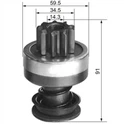
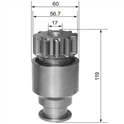
As a seasoned supplier of Starter Motor Drives, I've witnessed firsthand the critical role these components play in the automotive and industrial sectors. A Starter Motor Drive is a complex system designed to initiate the engine's operation by engaging the flywheel and providing the necessary torque to start the engine. In this blog, we'll explore the main components of a Starter Motor Drive, shedding light on their functions and importance.
Armature
The armature is the heart of the starter motor. It consists of a laminated iron core with copper windings wrapped around it. When an electric current is applied to the armature windings, a magnetic field is created. This magnetic field interacts with the magnetic field produced by the field coils, resulting in the rotation of the armature. The armature's rotation is then transferred to the drive mechanism, which engages the flywheel to start the engine. The design and construction of the armature are crucial for the performance of the starter motor. High - quality copper windings and a well - laminated iron core ensure efficient energy conversion and reliable operation.
Field Coils
Field coils are another essential component of the starter motor. These coils are typically made of copper wire and are wound around pole pieces. The field coils create a stationary magnetic field within the starter motor. When the armature rotates within this magnetic field, an electromotive force (EMF) is induced, which causes the armature to rotate. The strength of the magnetic field produced by the field coils affects the torque output of the starter motor. Stronger field coils can generate more torque, allowing the starter motor to start engines with higher compression ratios or larger displacements.
Solenoid
The solenoid is a key component in the starter motor drive system. It acts as a switch that controls the flow of electrical current to the starter motor. When the ignition key is turned, a small current is sent to the solenoid. The solenoid then uses this current to engage a set of contacts. Once the contacts are closed, a large current is allowed to flow from the battery to the starter motor, causing it to spin. In addition to controlling the electrical current, the solenoid also has a mechanical function. It is connected to the drive mechanism and is responsible for pushing the drive gear into engagement with the flywheel. This ensures that the starter motor can transfer its rotational energy to the engine's flywheel effectively.
Drive Mechanism
The drive mechanism is responsible for transferring the rotational motion of the armature to the engine's flywheel. There are several types of drive mechanisms, but one of the most common is the Bendix Drive Assembly. The Bendix drive consists of a drive gear and an overrunning clutch. When the starter motor begins to rotate, the drive gear is pushed forward by the solenoid and meshes with the teeth on the flywheel. The overrunning clutch allows the drive gear to transfer torque from the starter motor to the flywheel in one direction only. Once the engine starts and the flywheel rotates faster than the starter motor, the overrunning clutch disengages the drive gear from the flywheel, preventing the starter motor from being damaged by the high - speed rotation of the engine.
Countershaft
In some starter motor designs, a Countershaft for Starter Motor is used. The countershaft is an intermediate shaft that helps to increase the torque output of the starter motor. It is connected to the armature and the drive gear through a series of gears. The countershaft allows the starter motor to operate at a higher speed while reducing the load on the armature. This results in a more efficient and reliable starter motor. The gears on the countershaft are carefully designed to provide the optimal gear ratio for the specific application. A well - designed countershaft can significantly improve the performance of the starter motor, especially in applications where high torque is required.
Bendix System
The Bendix System is a well - known and widely used system in starter motor drives. It combines the functions of the solenoid and the drive mechanism. When the solenoid is activated, it not only closes the electrical contacts to supply power to the starter motor but also moves the drive gear into engagement with the flywheel. The Bendix system is known for its simplicity and reliability. It has been used in automotive and industrial applications for many years and has proven to be a cost - effective solution for starting engines. The design of the Bendix system ensures quick and smooth engagement of the drive gear with the flywheel, minimizing wear and tear on both components.
Housing
The housing of the starter motor drive serves several important functions. It provides a protective enclosure for the internal components, shielding them from dirt, moisture, and mechanical damage. The housing is typically made of cast iron or aluminum, which provides good strength and durability. It also helps to dissipate heat generated by the starter motor during operation. The design of the housing is carefully engineered to ensure proper ventilation and cooling of the internal components. Additionally, the housing has mounting points that allow the starter motor to be securely attached to the engine block or other equipment. A well - designed housing is essential for the long - term reliability of the starter motor drive.
Brushes
Brushes are small carbon or graphite components that make contact with the commutator on the armature. They are responsible for conducting electrical current from the battery to the armature windings. The brushes are held in place by brush holders and are spring - loaded to maintain constant contact with the commutator. Over time, the brushes can wear down due to friction with the commutator. Regular inspection and replacement of the brushes are necessary to ensure the proper operation of the starter motor. High - quality brushes with good electrical conductivity and low friction coefficient are essential for efficient energy transfer and long - lasting performance.


In conclusion, a Starter Motor Drive is a sophisticated system composed of multiple components, each playing a vital role in initiating the engine's operation. As a Starter Motor Drive supplier, we are committed to providing high - quality components that meet the strictest standards of performance and reliability. Whether you are in the automotive, industrial, or any other sector that requires reliable engine starting solutions, we can offer you the right Starter Motor Drive products.
If you are interested in our Starter Motor Drive products, we welcome you to contact us for a detailed discussion about your specific requirements. We have a team of experts who can provide you with professional advice and customized solutions. Let's work together to ensure the smooth and efficient operation of your engines.
References
- Automotive Electrical and Electronic Systems by William H. Crouse and Donald L. Anglin
- Modern Automotive Technology by James D. Halderman