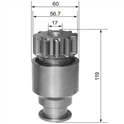
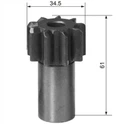
You know, when it comes to generators, the starter drive is a crucial component that often gets overlooked. As a starter drive supplier, I've seen firsthand how important it is to have the right starter drive for your generator. In this blog, I'll break down the key requirements for a starter drive in a generator - what you need to look out for, and why it matters.
Compatibility with Generator Engine
First off, the most basic requirement for a starter drive is compatibility with the generator's engine. Different engines have different power requirements and cranking speeds. You can't just throw any starter drive on a generator and expect it to work.
The starter drive needs to match the engine's specifications in terms of the number of teeth on the flywheel. A mismatch here can lead to the starter drive not engaging properly with the flywheel. Imagine trying to fit a square peg into a round hole - it's just not going to work. When the starter drive doesn't engage well, you'll face issues like the engine not starting or excessive wear on both the starter drive and the flywheel.
Beyond the tooth count, the starter drive must also be able to handle the torque required to turn the engine over. For bigger generators with more powerful engines, you'll need a starter drive that can deliver a higher torque. Otherwise, it'll be like asking a small kid to push a big truck - the starter drive will struggle and likely fail prematurely.
Durability and Reliability
Let's face it, generators are often used in all sorts of harsh environments. Whether it's a construction site in the middle of nowhere, or a backup power system in a coastal area with high humidity, the starter drive needs to hold up.
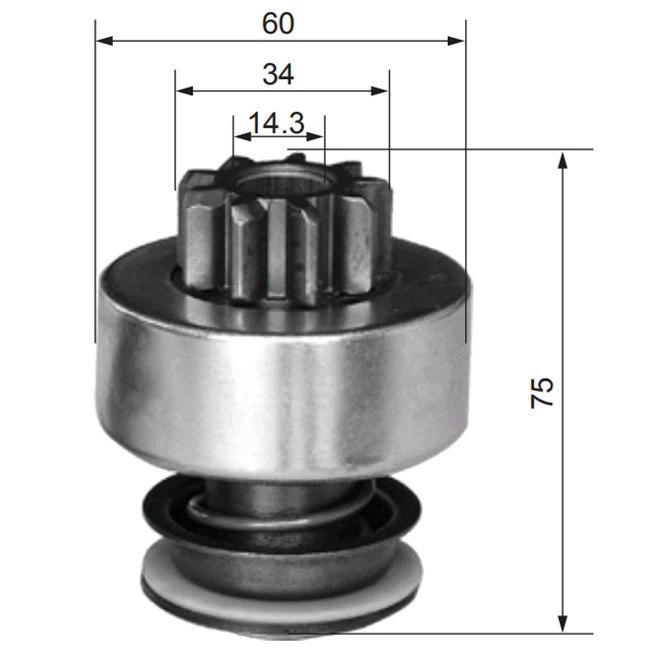

Durability is key. The materials used in the starter drive must be able to withstand wear and tear. For example, the gears in the starter drive should be made of high - quality metal that's resistant to corrosion and abrasion. If the gears start to wear down quickly, the starter drive won't function properly, and you'll end up with a generator that won't start when you need it most.
Reliability is closely linked to durability. A reliable starter drive starts the engine consistently, every single time. You don't want to be in a situation where you're relying on your generator during a power outage, and the starter drive fails. That's why we, as a starter drive supplier, put a lot of effort into testing our products to ensure they meet high - reliability standards.
Efficient Power Transfer
An efficient starter drive is all about transferring power from the starter motor to the engine as effectively as possible. There are a few factors that contribute to this.
One of them is the design of the overrunning clutch. The overrunning clutch allows the starter drive to engage with the flywheel when starting the engine and then disengage once the engine is running. A well - designed overrunning clutch ensures smooth engagement and disengagement, reducing power losses.
Another aspect is the overall mechanical efficiency of the starter drive. This includes things like proper lubrication of moving parts and low - friction materials. When the starter drive can transfer power efficiently, it not only helps the engine start more quickly but also reduces the load on the starter motor, which can extend its lifespan.
Ease of Installation and Maintenance
As a user, you don't want to spend hours trying to install a starter drive or dealing with complex maintenance procedures. That's why ease of installation and maintenance is an important requirement.
A good starter drive should come with clear installation instructions. It should be designed in a way that it can be easily mounted on the generator. This might involve features like standardized mounting holes or a simple connection system to the starter motor.
When it comes to maintenance, the starter drive should be accessible. You should be able to inspect it for wear and tear, lubricate it if necessary, and replace any worn parts without too much hassle. This not only saves you time but also reduces the cost of ownership in the long run.
Safety Features
Safety should never be overlooked. A starter drive in a generator should have built - in safety features to protect both the generator and the user.
One important safety feature is a thermal overload protection. When the starter motor runs for too long or draws too much current, it can overheat. A starter drive with thermal overload protection will automatically shut off the power to the starter motor to prevent damage.
Another safety consideration is the design of the overrunning clutch. A well - designed clutch will prevent the starter drive from engaging when the engine is already running. This is crucial because if the starter drive engages when the engine is running, it can cause serious damage to both the starter drive and the engine.
Our Starter Drive Offerings
As a starter drive supplier, we understand these requirements inside out. We offer a range of high - quality starter drives that meet all the criteria I've mentioned above.
For example, our Starter Motor Gear Bendix Drive is designed for maximum compatibility with a wide range of generator engines. It has a durable construction and a well - engineered overrunning clutch for efficient power transfer.
Our Drive ASM is another great option. It's easy to install and maintain, and it comes with safety features like thermal overload protection.
And if you're looking for something a bit different, our Inertia Drive Starter offers unique performance characteristics. It's designed to provide reliable starting power in various conditions.
Contact Us for Your Starter Drive Needs
If you're in the market for a starter drive for your generator, don't hesitate to reach out. We're here to help you find the perfect starter drive that meets your specific requirements. Whether you have questions about compatibility, durability, or any other aspect of our products, our team of experts is ready to assist you. Let's work together to ensure your generator starts smoothly every time.
References
- Automotive Electrical and Electronic Systems, Third Edition by William H. Crouse and Donald L. Anglin.
- Generator Handbook: Design, Construction, and Operation by Giandomenico Oliva.