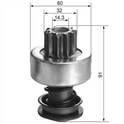
In the world of automotive and industrial engines, the starter motor Bendix plays a pivotal role in initiating the engine's operation. Serving as a provider of Starter Motor Bendix, I've gained deep insights into the nuanced differences between the Bendix systems designed for gasoline and diesel engines. Understanding these variations is not only crucial for engine manufacturers and repair technicians but also for end - users looking to ensure the reliable starting of their engines.
Fundamental Functions of a Starter Motor Bendix
Before delving into the differences, it's essential to comprehend the basic functions of a starter motor Bendix. A starter motor Bendix is a component within the engine's starting system that connects the starter motor to the engine's flywheel or ring gear. When the ignition key is turned, the starter motor spins the Bendix, which then engages with the flywheel. This action transfers the rotational force from the starter motor to the engine, enabling the engine to start. Once the engine starts running, the Bendix disengages to prevent the starter motor from being driven by the engine's high - speed rotation.


Design and Structural Differences
Gear Ratio
One of the most prominent differences between gasoline and diesel engine Bendix systems lies in the gear ratio. Diesel engines typically have a much higher compression ratio compared to gasoline engines. Gasoline engines usually operate with compression ratios ranging from 8:1 to 12:1, while diesel engines can have compression ratios between 14:1 and 25:1. This higher compression ratio means that diesel engines require more torque to turn over during startup.
To generate the necessary torque, diesel starter motor Bendixes are designed with a lower gear ratio. A lower gear ratio allows the starter motor to apply more force to the engine's flywheel by sacrificing some rotational speed. In contrast, gasoline engine Bendixes can have a higher gear ratio because they need less torque to start the engine. This higher gear ratio enables the starter motor to spin the engine more quickly, leading to a faster startup time.
Size and Durability
Diesel engines are generally larger and more powerful than gasoline engines, which also affects the design of their Bendix systems. Diesel starter motor Bendixes are often larger and more robust to withstand the higher forces involved in starting a diesel engine. The components, such as the gears and the engaging mechanism, are made from stronger materials. For example, the gears may be made of high - grade steel with special heat treatments to enhance their hardness and wear resistance.
On the other hand, gasoline engine Bendixes can be smaller and less heavy. Since the starting forces are relatively lower, the components do not need to be as heavy - duty. This difference in size and durability also impacts the cost, with diesel Bendixes typically being more expensive due to the higher - quality materials and more complex manufacturing processes.
Electrical Requirements
Voltage and Power
The electrical requirements for starting gasoline and diesel engines vary significantly. Diesel engines demand more electrical power to start because of their higher compression ratios. Most diesel engines use a 24 - volt electrical system to provide the necessary power to the starter motor. The higher voltage allows the starter motor to draw more current and generate more torque.
In contrast, gasoline engines commonly use a 12 - volt electrical system. The lower voltage is sufficient to provide the power needed to start the engine, as the starting torque requirements are lower. The difference in voltage also affects the design of the starter motor Bendix. Diesel Bendixes are designed to operate at a higher voltage and must be compatible with the 24 - volt electrical system, while gasoline Bendixes are optimized for 12 - volt systems.
Current Draw
The current draw of the starter motor is another important factor. Diesel starter motors draw a much higher current during startup compared to gasoline starter motors. This high current draw is necessary to generate the torque required to overcome the high compression of the diesel engine. As a result, the electrical wiring and the battery used in diesel engine starting systems need to be larger and more robust to handle the high current without overheating or causing voltage drops.
Gasoline engine starter motors draw a relatively lower current, which allows for the use of smaller electrical wiring and batteries. This difference in current draw is also reflected in the design of the Bendix, as diesel Bendixes need to be able to handle the higher electrical loads without malfunctioning.
Engagement and Disengagement Mechanisms
Engagement Force
The force required to engage the Bendix with the flywheel is different for gasoline and diesel engines. Diesel engines, due to their larger size and higher compression, require a greater engagement force. The Bendix mechanism in diesel engines is designed to apply a stronger force to ensure that the gears mesh properly with the flywheel. This may involve more powerful solenoids or mechanical linkages to push the Bendix into engagement.
Gasoline engines require less engagement force. The Bendix systems for gasoline engines can use smaller and less powerful solenoids, which simplifies the design and reduces the cost.
Disengagement Timing
The disengagement timing of the Bendix is also crucial. In diesel engines, the disengagement needs to be carefully timed to prevent damage to the starter motor. Since diesel engines can reach high speeds quickly once started, the Bendix must disengage promptly to avoid being driven by the engine. Special sensors and control systems are often used in diesel Bendixes to ensure accurate disengagement timing.
Gasoline engines have a more forgiving disengagement timing. The lower engine speeds during startup and the relatively lower forces involved mean that the disengagement can be less precise. However, proper disengagement is still necessary to prevent wear and tear on the starter motor and Bendix components.
Applications and Compatibility
Automotive and Industrial Applications
Gasoline engines are commonly used in passenger cars, small trucks, and some light - duty industrial equipment. The starter motor Bendixes for these applications are designed to meet the specific requirements of these engines, such as fast startup times and relatively low torque demands. For example, in a compact passenger car, a gasoline engine Bendix can quickly start the engine, allowing for a smooth and efficient driving experience.
Diesel engines are widely used in heavy - duty trucks, buses, construction equipment, and large industrial generators. The Bendix systems for diesel engines are engineered to handle the harsh operating conditions and high starting torque requirements of these applications. In a large construction excavator, a diesel engine Bendix must be able to start the engine reliably even in cold weather and under heavy loads.
Compatibility Considerations
When replacing a starter motor Bendix, it is essential to ensure compatibility with the engine type. Using a gasoline engine Bendix in a diesel engine will likely result in a failure to start the engine due to the insufficient torque. Conversely, using a diesel engine Bendix in a gasoline engine may cause unnecessary wear and tear on the engine components and the starter motor itself.
Our Starter Motor Bendix Offerings
As a Starter Motor Bendix supplier, we offer a wide range of products tailored to both gasoline and diesel engines. Our GM Starter Bendix is designed to meet the high - quality standards of General Motors engines. It provides reliable starting performance and is compatible with various GM gasoline and diesel engine models.
For those in need of a starter Bendix for a specific tractor model, our 8n Starter Bendix is an excellent choice. It is engineered to fit perfectly with 8n tractor engines, ensuring smooth and efficient starting.
Our Starter Motor Gear Bendix Drive is a versatile product suitable for a variety of engine types. It features high - quality gears and a robust engaging mechanism, providing long - lasting performance.
Conclusion
In conclusion, the differences between a starter motor Bendix for a gasoline and a diesel engine are significant and stem from the fundamental differences in the engines' design and operating characteristics. These differences include gear ratios, size and durability, electrical requirements, engagement and disengagement mechanisms, and application compatibility. As a Starter Motor Bendix supplier, we understand the importance of these differences and are committed to providing high - quality products that meet the specific needs of our customers. Whether you are an engine manufacturer, a repair technician, or an end - user, if you are in the market for a starter motor Bendix, we invite you to contact us for a detailed discussion on your requirements. We are here to help you find the perfect Bendix solution for your engine.
References
- Heywood, J. B. (1988). Internal Combustion Engine Fundamentals. McGraw - Hill.
- Taylor, C. F. (1985). The Internal Combustion Engine in Theory and Practice. MIT Press.