What is the speed range of Starter Drives?
As a seasoned supplier of Starter Drives, I've witnessed firsthand the pivotal role these components play in the automotive and industrial sectors. Starter drives are the unsung heroes that kick - start engines, ensuring reliable ignition and smooth operation. One of the most frequently asked questions I encounter is about the speed range of starter drives. In this blog, I'll delve into the intricacies of this topic, exploring the factors that influence the speed range and the importance of understanding it for optimal performance.
Understanding Starter Drives
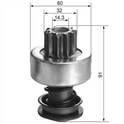
Before we dive into the speed range, let's briefly understand what starter drives are. Starter drives are mechanical devices that engage with the engine's flywheel or ring gear to crank the engine during startup. They typically consist of a Bendix drive, which is responsible for the engagement and disengagement process, and an overrunning clutch that prevents the engine from driving the starter motor once the engine starts.
There are different types of starter drives available in the market, such as GM Starter Bendix, Starter Motor Drive Bendix, and Starter Motor Bendix. Each type is designed to meet specific requirements and is engineered with precision to ensure efficient operation.
Factors Influencing the Speed Range
The speed range of starter drives is not a fixed value but is influenced by several factors. These factors can be broadly categorized into design - related factors and operational factors.
Design - Related Factors
- Gear Ratio: The gear ratio of the starter drive is a crucial design factor that affects its speed range. A higher gear ratio means that the starter motor can turn the engine's flywheel at a slower speed but with more torque. Conversely, a lower gear ratio allows for a higher rotational speed but with less torque. Manufacturers carefully select the gear ratio based on the engine's requirements, such as its size, compression ratio, and starting load.
- Motor Characteristics: The type and specifications of the starter motor also play a significant role in determining the speed range. Different motors have different power outputs, torque curves, and speed - torque relationships. For example, a high - performance starter motor may be capable of achieving a higher maximum speed compared to a standard motor, but it may also consume more power.
- Bendix Drive Design: The design of the Bendix drive, including the shape and size of the gears and the engagement mechanism, can impact the speed range. A well - designed Bendix drive ensures smooth engagement and disengagement, which is essential for maintaining the proper speed range during startup.
Operational Factors
- Battery Voltage: The voltage supplied by the battery is a critical operational factor that affects the speed of the starter drive. A fully charged battery provides a higher voltage, which allows the starter motor to operate at a higher speed. Conversely, a low - voltage battery can cause the starter motor to run slower, leading to a reduced speed range and potentially difficulty in starting the engine.
- Engine Temperature: The temperature of the engine can also influence the speed range of the starter drive. In cold weather, the engine oil becomes thicker, increasing the friction and resistance within the engine. This requires the starter drive to work harder to crank the engine, resulting in a lower speed range. On the other hand, in hot weather, the engine components may expand, which can also affect the starting performance.
- Load on the Engine: The load on the engine, such as the presence of accessories or a heavy - duty transmission, can impact the speed range of the starter drive. A higher load requires more torque to start the engine, which may result in a lower speed range as the starter motor has to work harder to overcome the resistance.
Typical Speed Range of Starter Drives
The speed range of starter drives can vary depending on the application and the specific design of the drive. In general, for automotive applications, the speed range of starter drives during startup is typically between 200 and 500 revolutions per minute (RPM). This speed is sufficient to crank the engine and initiate the combustion process.
In industrial applications, where larger engines or more complex machinery are involved, the speed range may be slightly different. Industrial starter drives may operate at speeds ranging from 150 to 400 RPM, depending on the size and requirements of the equipment.
It's important to note that these are just general ranges, and the actual speed range of a starter drive can be influenced by the factors mentioned above. For example, a high - performance automotive starter drive may be capable of achieving speeds closer to the upper end of the range, while a starter drive designed for a heavy - duty industrial engine may operate at speeds closer to the lower end.


Importance of Understanding the Speed Range
Understanding the speed range of starter drives is crucial for several reasons. Firstly, it helps in the proper selection of the starter drive for a specific application. By knowing the speed requirements of the engine or machinery, users can choose a starter drive that is capable of providing the necessary speed and torque to start the equipment reliably.
Secondly, monitoring the speed range during startup can be an indicator of the health of the starter drive and the engine. If the starter drive is operating outside of the normal speed range, it may indicate a problem, such as a worn - out motor, a faulty Bendix drive, or a low - voltage battery. Early detection of these issues can prevent more serious problems and reduce downtime.
Finally, understanding the speed range can also help in optimizing the performance of the starter drive. By ensuring that the battery is fully charged, the engine is properly maintained, and the load on the engine is within the recommended limits, users can maximize the speed range and improve the starting performance of the equipment.
Contact for Procurement
If you're in the market for high - quality starter drives and are looking to discuss your specific requirements, I encourage you to reach out. Our team of experts is well - versed in the intricacies of starter drive technology and can help you select the right product for your application. Whether you need a GM Starter Bendix, Starter Motor Drive Bendix, or Starter Motor Bendix, we have a wide range of options to meet your needs.
References
- Automotive Engineering Handbook, Society of Automotive Engineers
- Industrial Machinery Design and Operation Manual, American Society of Mechanical Engineers
- Starter Drive Technical Specifications, Various Manufacturers' Documentation