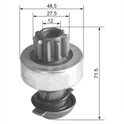
At Wuxi Superhuman Gear Cold Extrusion Co., Ltd., this is a question we hear quite often-usually after a customer experiences starting issues: "How long should a Bendix drive actually last?"
The honest answer is: there isn't a fixed number. In real-world use, the lifespan of a Bendix drive depends heavily on usage conditions, material quality, and maintenance habits rather than just time.
1. Typical lifespan in real applications
Under normal conditions, a Bendix drive can last:
- 80,000 to 150,000 start cycles
However, this range can vary significantly.
We've seen passenger cars run for years without any issues, while some commercial vehicles required replacement much earlier. The difference usually comes down to how often and under what conditions the starter system is used.
2. What affects the lifespan of a Bendix drive?
From our manufacturing and field experience at Wuxi Superhuman Gear Cold Extrusion Co., Ltd., several key factors determine durability:
a) Frequency of engine starts
Vehicles with frequent start-stop cycles (delivery vans, taxis) wear faster
Occasional-use vehicles experience much less stress
We once worked with a fleet customer where vehicles in urban delivery routes showed earlier wear simply due to repeated daily starts.
b) Load and engine type
Diesel engines typically require higher starting torque
Heavy equipment puts more stress on the drive system
Higher torque means more stress on:
- Gear teeth
- Overrunning clutch
- Internal components
c) Manufacturing quality
This is one of the most critical factors.
The lifespan is directly influenced by:
- Gear precision
- Material strength
- Heat treatment quality
- Surface finish
We've analyzed failed components where the issue was not design, but inconsistent manufacturing-leading to uneven wear and premature failure.
d) Operating environment
Dust, moisture, and contamination can affect movement
Poor lubrication increases friction
Extreme temperatures can influence material behavior
In some industrial applications, environmental factors reduce lifespan much faster than expected.
3. Common signs that a Bendix drive is wearing out
In real use, a failing Bendix drive usually gives early warning signs:
- Starter motor spins but engine doesn't engage
- Grinding or abnormal noise during startup
- Intermittent starting problems
- Delayed engagement
We always advise customers not to ignore these signs, because continued use can lead to damage to the flywheel as well.
4. Can you extend the lifespan?
While the Bendix drive is not a "high-maintenance" component, some practical steps can help extend its service life:
Keep the starter system clean
Prevent dust and debris from affecting movement
Ensure proper installation and alignment
Misalignment increases wear significantly
Avoid unnecessary repeated starts
Especially when the engine doesn't start immediately
Use quality components
Precision manufacturing plays a major role in durability
We've seen customers improve service life simply by switching to more consistent, higher-precision components.
5. When should you replace it?
In practice:
Minor issues (like contamination) → may be cleaned and restored
Gear wear or clutch slipping → replacement is recommended
Because the Bendix drive is a critical engagement component, failure can affect the entire starting system.
Final thoughts from real-world experience
At Wuxi Superhuman Gear Cold Extrusion Co., Ltd., we've found that a fixed number does not define the lifespan of a Bendix drive, but by how well it matches the application.
A properly manufactured and correctly used Bendix drive can operate reliably for a long time. But under heavy use, poor conditions, or lower-quality production, wear can appear much earlier.
In real applications, durability comes down to three things:
precision manufacturing, proper usage, and early attention to warning signs
When these factors are managed well, the Bendix drive remains a reliable and often overlooked part of the starting system-until the moment it's needed most.