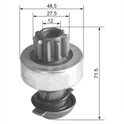
The design quality of the starting system of the automobile starter directly affects the starting performance of the automobile. In order to design the starting system, the design parameters of the starter must be determined first. How to judge the performance of automobile starter?
1. Engine starting characteristics
Starting is the preparation stage for engine operation. With the help of the starter, the engine accelerates the crankshaft from a static state to a state where mixture combustion can be carried out and the engine can work independently. The working process of the engine during starting is basically the same as that during normal operation, but the engine is driven to rotate by the starter when it is cold or stopped. During starting, the resistance torque and instantaneous angular speed of the crankshaft rotation change, and the resistance torque rapidly rises to a high value when starting. Then it decreases and tends to a stable value after a period of time. The starting characteristics of engine can be evaluated by low starting speed, starting resistance torque and average resistance torque.
2. Performance requirements of engine for starter
1) The starter must provide enough starting torque to ensure that the starting resistance torque of the engine can be overcome under a certain ambient temperature to make the crankshaft rotate.
2) The starter must have the ability to drive the engine at a low starting speed or above, that is, the starter must have enough power to overcome the average resistance torque of the engine and have enough speed to start the engine smoothly.
3. Determination of starter performance requirements
The performance parameters of the starter shall ensure the coordination of the characteristics of the starting system components and make full use of the power supply.