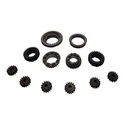
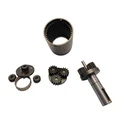
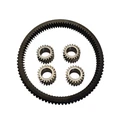
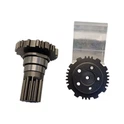
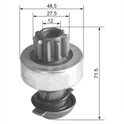
At Wuxi Superhuman Gear Cold Extrusion Co., Ltd., we've supplied Bendix drive components to both OEM starter manufacturers and aftermarket distributors worldwide. And the question we hear most often isn't "What's the difference?" but "When should I choose OEM-spec versus aftermarket-and what am I really giving up or gaining?" The answer isn't found in price lists. It comes from understanding application requirements, total cost of ownership, and what "reliability" actually means in your operating environment.
Last autumn, a regional fleet manager came to us frustrated. They'd been using low-cost aftermarket Bendix replacements to control maintenance budgets, but warranty claims were rising. After analyzing returned units in our lab, we found a pattern: the aftermarket drives engaged fine initially, but pinion tooth wear accelerated after 15,000–20,000 km due to softer material hardness and less consistent cold-forming quality. After switching to OEM-spec Bendix components manufactured with precision cold extrusion and controlled heat treatment, their mean-time-between-failure increased by 2.3x. The upfront cost was higher-but the total cost per reliable start was lower.
OEM Bendix Drives: Precision Engineered for Specific Applications
OEM (Original Equipment Manufacturer) Bendix drives are designed and validated for a specific vehicle platform. At Superhuman Gear, we produce these to exacting standards because we know the consequences of failure:
- Tighter dimensional tolerances: Spline fit, pinion travel distance, and tooth profile are controlled to ensure repeatable engagement across temperature extremes.
- Application-specific materials: Pinion gears may use alloy steels with optimized cold-extrusion grain flow for fatigue resistance in high-torque diesel applications.
- Validated performance data: OEM components undergo rigorous testing-cold cranking at -30°C, thermal cycling, engagement durability-before approval.
One commercial vehicle OEM client reduced starter warranty claims by 40% after we helped them transition to cold-extruded pinion gears with reinforced tooth roots-simply by aligning manufacturing capability with real-world stress profiles.
Aftermarket Bendix Drives: Cost Savings with Important Trade-Offs
Aftermarket options serve a legitimate need: affordable repairs for older vehicles, non-critical applications, or budget-conscious operations. But quality varies significantly. From our failure analysis work, common aftermarket compromises include:
- Looser tolerances: May engage acceptably in bench testing but show inconsistent performance under real-world vibration and temperature swings.
- Generic material specs: Cut gears instead of cold-extruded, or standard heat treatment instead of application-optimized processing.
- Limited validation: Often tested only at room temperature, without simulating cold-crank or high-duty-cycle conditions.
That said, not all aftermarket is equal. Some suppliers invest in precision manufacturing and application testing-bridging the gap between cost and reliability. We help clients identify these partners through dimensional audits and performance benchmarking.
How to Decide: A Practical Framework
When evaluating OEM vs. aftermarket Bendix drives, we recommend this decision workflow:
✅ Choose OEM-spec when:
- The vehicle operates in demanding conditions (cold climates, heavy loads, start-stop duty)
- Downtime costs exceed component price differences
- Warranty coverage or regulatory compliance requires certified parts
- Long-term fleet reliability is a priority
✅ Aftermarket may be viable when:
- The application is non-critical or short-term
- Budget constraints are immediate and absolute
- You can verify the supplier's quality controls and testing protocols
- You're comfortable with potentially shorter service life
One agricultural equipment distributor adopted this framework and reduced their Bendix-related service calls by 35%-not by always choosing OEM, but by matching component quality to actual usage patterns.
Our Approach at Wuxi Superhuman Gear
We don't push one sourcing strategy over another. When a client asks about OEM vs. aftermarket, we help them:
- Define their actual operating conditions and failure cost tolerance
- Audit supplier capabilities: cold extrusion precision, heat treatment control, testing rigor
- Validate dimensional and performance compatibility before bulk commitment
- Balance upfront cost against total cost of ownership
The Bottom Line
OEM and aftermarket Bendix drives aren't inherently "better" or "worse"-they solve different priorities. OEM-spec delivers engineered reliability for demanding applications. Quality aftermarket offers cost-effective solutions for less critical use. The key is matching component capability to your actual needs-not just price or brand.
If you're evaluating Bendix drive sourcing options, share your specific application requirements with us. At Wuxi Superhuman Gear Cold Extrusion Co., Ltd., we engineer starter components based on measured performance data and field-proven reliability. Because in automotive service, the best choice isn't the cheapest part-it's the one that engages cleanly, starts reliably, and keeps vehicles moving mile after mile.