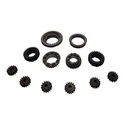
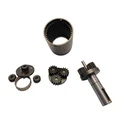
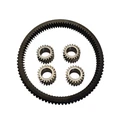
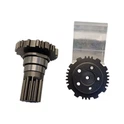
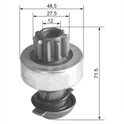
When customers ask us at Wuxi Superhuman Gear Cold Extrusion Co., Ltd. where Bendix drives are actually used, the short answer is simple: any machine that relies on an electric starter motor to crank an engine.
But in real-world applications, the requirements can vary a lot depending on the type of vehicle or equipment. From our manufacturing and field experience, understanding these differences helps customers choose the right design and avoid early failures.
1. Passenger cars: high volume, stable performance requirements
The most common application is in passenger vehicles.
In these systems, the Bendix drive is responsible for:
Quick engagement with the flywheel
Smooth and quiet startup
Reliable performance over thousands of cycles
We've worked with aftermarket customers supplying parts for daily-use vehicles, where the expectation is consistency rather than extreme load capacity. The challenge here is not maximum strength, but precision and durability over time.
A small issue-like slight gear inaccuracy-can result in noise complaints or intermittent starting problems, which are unacceptable in this segment.
2. Commercial trucks: higher torque and heavier duty cycles
In trucks and commercial vehicles, the working conditions become more demanding.
Compared to passenger cars:
Engines are larger
Starting torque is higher
Usage frequency can be much greater
We once supported a fleet maintenance customer who noticed that starter components wore out faster than expected. After analysis, the issue wasn't misuse-it was that the Bendix drives were not designed for repeated heavy-load cycles.
In this segment, the Bendix drive must offer:
Stronger gear strength
More robust overrunning clutch performance
Better resistance to wear
In short: higher load, higher durability requirements
3. Heavy equipment: harsh environments and extreme conditions
Applications in construction machinery, agricultural equipment, and industrial engines are even more demanding.
Typical conditions include:
Dust, mud, and contamination
High vibration
Irregular but heavy starting loads
We've seen real cases where equipment operated in dusty environments experienced sticking Bendix drives due to debris entering the system. Even when the design was correct, environmental factors significantly affected performance.
In these applications, the Bendix drive must handle:
Tough operating environments
Higher stress during startup
Less predictable maintenance cycles
4. Diesel vs gasoline engines: different starting characteristics
Another important distinction across applications is the engine type.
Gasoline engines
Lower compression
Easier startup
Lower stress on the Bendix drive
Diesel engines
Higher compression
Require more torque to start
Place greater stress on gears and clutch components
We've worked with customers who initially used standard components in diesel systems and experienced premature wear. Once upgraded to higher-strength designs, the performance stabilized.
5. Aftermarket vs OEM applications
Bendix drives are used both in:
OEM production (original equipment)
Aftermarket replacement and repair
In aftermarket applications, compatibility becomes more complex because:
One design may need to fit multiple models
Operating conditions are less predictable
This is where manufacturing consistency becomes especially important, something we focus on heavily at Wuxi Superhuman Gear Cold Extrusion Co., Ltd.
6. Why application matters when selecting a Bendix drive
From our experience, many issues arise not because the Bendix drive is poorly made, but because it is not matched to the application.
For example:
A passenger car design used in heavy equipment → early failure
A standard load design used in diesel engines → excessive wear
The same component behaves very differently under different conditions.
Final thoughts from real application experience
At Wuxi Superhuman Gear Cold Extrusion Co., Ltd., we see Bendix drives used across a wide range of industries-from everyday vehicles to heavy-duty machinery.
While the working principle is the same, the performance expectations are completely different depending on the application. Passenger cars require smooth and quiet operation, trucks demand durability under load, and heavy equipment pushes components to their limits in harsh environments.
In real-world use, the key to reliability is not just the design itself, but how well the Bendix drive is matched to the specific working conditions it will face.