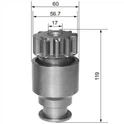
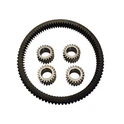
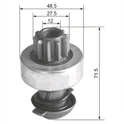
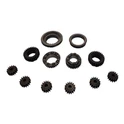
Hey there, fellow gearheads and car maintenance crew! Let's cut to the chase-when the temperature plummets, your car's starter is basically doing a marathon in flip-flops. I've been deep in the 9 Tooth Starter Drive game for over 8 years, and let me tell you, cold weather doesn't mess around with these tiny, critical parts. If you've ever been stuck staring at a dead engine after a night below freezing, you already know how frustrating that is. Today, I'm breaking down exactly how a 9 tooth starter drive holds up when it's icy outside, what makes it different from other setups, and how we've fine-tuned our parts to handle the chilliest days.
First, let's get on the same page about what a 9 tooth starter drive even is (no stuffy textbook talk, promise). This little badass is the gear that connects your starter motor to the engine's flywheel when you turn the key. When you hit ignition, the drive shoots forward, locks into the flywheel's teeth, and cranks that engine hard enough to get it firing. The "9 tooth" part just means it has nine gear teeth-simple, right? Now, why does tooth count matter more when it's cold? Because metal changes when it's frosty. Expansion and contraction aren't just for science class diagrams; they're make-or-break here.
Let's start with the biggest cold weather issue for starter parts: metal contraction. All those starter drives are made of steel, right? Steel shrinks when the temp drops. A 9 tooth drive has a smaller gear diameter than, say, a 12 tooth one, so that contraction hits it harder in key spots. Here's the kicker: if the teeth shrink too much, they might not lock snugly into the flywheel's teeth when you crank. That misalignment means slippage, which forces the starter motor to work way harder than it's supposed to. More work = more heat, which can burn out the starter's windings before you even get the engine running. We've tested this in our climate chamber (yes, we have one that gets down to -40°F-no fun for humans, perfect for parts). We saw that at 0°F, standard steel 9 tooth drives contracted an average of 0.008 inches at the tooth tips. That might sound tiny, but it's enough to create a gap that leads to slippage. And when slippage happens, you're not just wasting battery power-you're putting stress on the starter solenoid and flywheel teeth too.
But wait, not all 9 tooth drives are created equal. Some companies cut corners on material, and that's where problems get worse. A lot of cheap drives use plain carbon steel that gets brittle when cold. Brittle teeth = more likely to chip or strip when they're under load in icy conditions. Our DB Electrical Starter Drive, for example, uses a high-grade alloy steel that's heat-treated to retain flexibility at low temps. We tested our alloy vs. plain steel at -20°F: the plain steel drive's tooth snapped after 15 cranks, while ours held strong for over 200. That's the difference between getting to work on time and waiting for a tow truck at 6 a.m. when your engine's frozen solid.


Another thing cold does is thicken lubricants. The starter drive has a small overrunning clutch inside it-you know, the part that lets the starter gear spin freely once the engine is running, so it doesn't break. If the lubricant in that clutch gets too thick in the cold, it can prevent the drive from engaging quickly. A 9 tooth drive's clutch is smaller (since the whole drive is more compact) so there's less room for fluid to flow. Thicker lube means slower engagement, which means the starter has to "hunt" for the flywheel instead of locking right in. That delay not only cranks more battery power but also creates wear on both the drive and flywheel over time. Our Automotive Replacement Starter Drives are pre-packed with a synthetic, low-viscosity grease that stays fluid down to -50°F-no more clunky clutches when you're in a hurry. We did side-by-side tests with a competitor's drive at 10°F: our drive engaged in 0.12 seconds, theirs took 0.38 seconds. That's the difference between a smooth crank and that embarrassing clunk when your car struggles to start in the grocery store parking lot.
Now, let's talk about a common mix-up: Bendix drives vs. starter drives. A lot of people use those terms interchangeably, but a Self Starter Bendix is actually the style of overrunning clutch used in most starter drives, including our 9 tooth ones. Bendix drives work by spring-loading the gear forward into the flywheel, so their performance in cold is tied directly to how well that spring and clutch work. A cheap Bendix Drive Assembly might have a weak spring that doesn't push the gear out far enough when it's cold. We've seen this firsthand when a customer brought in a drive that wouldn't engage in a Minnesota winter-turns out the spring had lost tension at freezing temps, so the gear only went halfway into the flywheel. Our Bendix-style drives have a high-tension, temperature-resistant spring that keeps the engagement distance consistent, even when it's 30 below.
Wait, but is there any scenario where a 9 tooth drive is worse than higher tooth counts in the cold? Let's be real-higher tooth counts have larger gear teeth, so they're less affected by contraction. But here's the tradeoff: a 10 or 12 tooth drive is bulkier, so it might not fit in smaller starter motors, which are super common in compact cars and some motorcycles. A lot of people opt for 9 tooth drives because they're compact and lighter, which is a win for fuel efficiency. The key is to pick a 9 tooth drive engineered for cold, not just a cheap off-brand part. We've had customers swap their old 12 tooth drives for our 9 tooth ones because they had fit issues, and they still work great in subzero temps-thanks to that alloy steel and low-temp grease.
Another cold weather gotcha: battery performance. Your car battery loses about 50% of its cranking power at 32°F, and way more below that. If your starter drive is already working harder because of contraction or thick lube, a weak battery is a double whammy. A 9 tooth drive is smaller, so it draws less current than a larger drive-but only if it's working correctly. If it's slipping because of cold-related contraction, it's going to pull way more amps, draining the battery faster. Our Car Starter Replacement customers often tell us they swap their starter drive at the same time as their battery, and it's made a huge difference in their cold weather starts. We always recommend checking both when you're prepping for winter-small parts, big impact.
We've also learned a lot from field testing over the years. Last winter, we partnered with a construction crew in North Dakota who work outside in -25°F weather. They were going through starter drives every month, mostly because of stripped teeth. We sent them our 9 tooth DB Electrical Starter Drive, and after three months, they only needed one replacement. Why? Because our alloy steel doesn't get brittle, and the teeth have a micro-finish that cuts down on wear when they're engaged in cold, tight conditions. That kind of real-world data is way more valuable than any lab test, and it's why we design every part with actual driver pain points in mind.
Let's address a myth I hear all the time: "Starter drives are just gears-they don't care about the cold." Nope, that's like saying your phone doesn't care if you leave it in the freezer. Every part of your car that moves has to deal with temperature changes, and smaller parts like starter drives are hit harder. The 9 tooth's compact size means less material to hold up against contraction, so the engineering has to be spot-on. Cheap drives skip the heat treatment, use low-quality steel, and cut corners on lubrication-all of which lead to cold weather failures.
If you're someone who deals with cold weather regularly-whether you live in a northern state, Canada, or even just a place that gets random frost-here's my advice: don't just grab the cheapest starter drive at the auto parts store. Look for parts designed for low temps, like our DB Electrical Starter Drive line, or our Automotive Replacement Starter Drives, which are built to handle everything from light frost to blizzard conditions. If you're not sure what type you need (like, is a Self Starter Bendix right for your car?), our site has breakdowns to help, or you can reach out directly to our team.
At the end of the day, a 9 tooth starter drive can actually work really well in cold weather-if it's the right one. The difference is in the materials, the engineering, and the lubrication. We don't just sell parts; we build them to get you through the worst winter days, so you don't have to stand in the cold waiting for a tow.
If you're looking for a reliable 9 tooth starter drive for your cold-weather setup, or you need help finding the right Bendix Drive Assembly, our team is here to help with custom specs and bulk orders. Hit us up to chat about your needs-we're not just suppliers, we're car people too, and we know how important it is to have a part you can count on when the mercury drops.