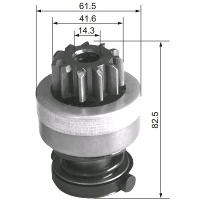
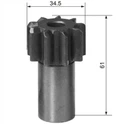
As a supplier of overrunning - clutch drives, I am often asked about how these essential components work, especially in the context of a textile - machine system. In this blog, I will delve into the inner workings of overrunning - clutch drives and explain their significance in textile machines.
Understanding the Basics of Overrunning - Clutch Drives
An overrunning - clutch drive is a mechanical device that allows a shaft to rotate freely in one direction while preventing rotation in the opposite direction. It is a crucial part in many machinery systems, including textile machines. The basic principle behind an overrunning - clutch drive is to provide a one - way motion transfer.
There are several types of overrunning - clutch drives, such as sprag clutches, roller clutches, and wrap - spring clutches. Each type has its own unique design and working mechanism, but they all share the common goal of enabling one - way rotation.


How Overrunning - Clutch Drives Function in Textile Machines
In a textile - machine system, overrunning - clutch drives play a vital role in various operations. Let's take a closer look at some of the key functions and how they work.
1. Power Transmission
Textile machines often require the transfer of power from the motor to different components at specific times. An overrunning - clutch drive allows the power to be transmitted only when the driving shaft is rotating in the desired direction. For example, in a weaving machine, the overrunning - clutch drive can ensure that the power from the main motor is transferred to the shuttle mechanism only when the shuttle needs to move in a particular direction. This helps in efficient power utilization and reduces unnecessary wear and tear on the machine.
2. Overload Protection
Textile machines can sometimes experience sudden overloads due to factors such as thread jams or mechanical failures. The overrunning - clutch drive acts as a safety mechanism in such situations. When an overload occurs, the clutch disengages, preventing damage to the motor and other components of the machine. This is particularly important in high - speed textile machines where a sudden overload can cause significant damage.
3. Synchronization
In a textile - machine system, different components need to work in synchronization. The overrunning - clutch drive helps in achieving this synchronization by allowing the components to rotate at the appropriate times. For instance, in a spinning machine, the overrunning - clutch drive can ensure that the spinning spindle rotates at the correct speed and in the right direction, in sync with the other parts of the machine.
Types of Overrunning - Clutch Drives and Their Applications in Textiles
Sprag Clutches
Sprag clutches are one of the most commonly used types of overrunning - clutch drives in textile machines. They consist of sprags, which are small wedges that are placed between an inner and an outer race. When the inner race rotates in the driving direction, the sprags wedge between the races, locking them together and transmitting torque. When the inner race tries to rotate in the opposite direction, the sprags disengage, allowing free rotation.
In textile machines, sprag clutches are often used in conveyor systems to ensure that the conveyor belt moves in one direction only. They are also used in some types of winding machines to prevent the unwinding of the yarn in the wrong direction.
Roller Clutches
Roller clutches use cylindrical rollers instead of sprags. The rollers are placed between an inner and an outer race, and when the inner race rotates in the driving direction, the rollers are forced into a wedging position, transmitting torque. Roller clutches are known for their high torque capacity and smooth operation.
In textile machines, roller clutches are used in applications where high - speed rotation and precise control are required. For example, in a high - speed knitting machine, roller clutches can be used to control the movement of the knitting needles, ensuring that they move in the correct sequence.
Wrap - Spring Clutches
Wrap - spring clutches consist of a helical spring that is wrapped around an inner and an outer hub. When the inner hub rotates in the driving direction, the spring tightens around the outer hub, transmitting torque. When the inner hub rotates in the opposite direction, the spring loosens, allowing free rotation.
Wrap - spring clutches are often used in textile machines for applications such as tension control. They can be used to maintain a constant tension on the yarn during the weaving or spinning process.
Comparison with Other Starter Drives
It's important to note that overrunning - clutch drives are not the only type of drives used in machinery. There are other types of starter drives, such as Automotive Replacement Starter Drives, Inertia Drive Starter, and Starter Motor Drive Bendix.
Automotive Replacement Starter Drives are designed for use in automotive engines. They are typically used to start the engine by engaging the flywheel. Inertia Drive Starters use the inertia of a rotating mass to engage the starter gear with the flywheel. Starter Motor Drive Bendix is a type of starter drive that uses a solenoid to engage the starter gear with the flywheel.
While these starter drives are important in the automotive industry, they have different applications and working principles compared to overrunning - clutch drives in textile machines. Overrunning - clutch drives are specifically designed for one - way motion transfer and are optimized for the unique requirements of textile - machine systems.
Advantages of Using Overrunning - Clutch Drives in Textile Machines
1. Efficiency
Overrunning - clutch drives help in improving the efficiency of textile machines by ensuring that power is transmitted only when needed. This reduces energy consumption and increases the overall productivity of the machine.
2. Durability
These drives are designed to withstand the harsh operating conditions in textile machines. They are made of high - quality materials and are engineered to provide long - lasting performance.
3. Flexibility
Overrunning - clutch drives can be easily integrated into different types of textile machines. They can be customized to meet the specific requirements of each machine, making them a versatile solution for the textile industry.
Conclusion
In conclusion, overrunning - clutch drives are an essential component in textile - machine systems. They play a crucial role in power transmission, overload protection, and synchronization. By understanding how these drives work and their applications in textile machines, manufacturers can make informed decisions about the use of overrunning - clutch drives in their equipment.
If you are in the textile industry and are looking for high - quality overrunning - clutch drives, we are here to help. Our company offers a wide range of overrunning - clutch drives that are designed to meet the specific needs of textile machines. We have a team of experts who can provide you with technical support and guidance to ensure that you choose the right drive for your application. Contact us today to start a procurement discussion and find the best solution for your textile - machine system.
References
- "Mechanical Design Handbook" by Robert C. Juvinall and Kurt M. Marshek
- "Textile Machinery: Fundamentals and Applications" by S. K. Behera