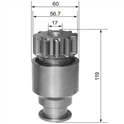
Hey there! As a supplier of Inertia Drive Starters, I'm super stoked to dive into the technical specifications of these nifty devices. So, let's get right into it!
Basic Working Principle
First off, let's talk about how an Inertia Drive Starter works. It's all about using inertia to engage the starter drive with the flywheel ring gear. When you turn the ignition key, the starter motor starts spinning. The inertia of the rotating components inside the starter causes a drive pinion to move forward and mesh with the flywheel. Once the engine starts, the pinion disengages automatically to prevent damage.
Key Components
- Starter Motor: This is the heart of the Inertia Drive Starter. It converts electrical energy from the battery into mechanical energy to start the engine. The motor typically has a high torque output to crank the engine, especially in cold weather or when the engine is under heavy load.
- Drive Mechanism: The drive mechanism is responsible for engaging and disengaging the pinion with the flywheel. In an inertia drive system, this is usually done through a series of springs and gears. The inertia of the rotating parts causes the pinion to slide forward and mesh with the flywheel teeth.
- Pinion Gear: The pinion gear is the small gear that meshes with the larger flywheel ring gear. It needs to be made of high - strength material to withstand the forces during engagement and disengagement. A well - designed pinion gear ensures smooth starting and long - term reliability.
Technical Specifications
Voltage
Most Inertia Drive Starters are designed to work with standard automotive battery voltages, typically 12 volts for passenger cars and light trucks. However, in some heavy - duty applications, 24 - volt systems may be used. The voltage rating is crucial as it determines the power output of the starter motor. If the voltage is too low, the starter may not have enough power to crank the engine, while too high a voltage can damage the motor.
Power Output
The power output of an Inertia Drive Starter is usually measured in horsepower (hp) or kilowatts (kW). For small engines, such as those in motorcycles or small lawnmowers, a starter with a power output of around 0.5 - 1 hp may be sufficient. In larger vehicles like cars and trucks, starters can have power outputs ranging from 1 - 3 hp or more, depending on the engine size and compression ratio.
Torque
Torque is another important specification. It refers to the rotational force that the starter can generate. A high - torque starter is essential for engines with high compression ratios or large displacements. The torque output is affected by factors such as the motor design, gear ratio, and the strength of the magnetic field in the motor.


Gear Ratio
The gear ratio of the starter drive system determines how the rotational speed and torque are transferred from the starter motor to the flywheel. A higher gear ratio means more torque at the flywheel but lower rotational speed. This is beneficial for starting large engines that require a lot of force to turn over. On the other hand, a lower gear ratio provides higher rotational speed but less torque, which may be suitable for smaller engines.
Dimensions
The physical dimensions of the Inertia Drive Starter are also important, especially when it comes to installation. The starter needs to fit into the available space in the engine compartment. Dimensions such as length, width, and height need to be carefully considered to ensure compatibility with different vehicle models.
Durability and Reliability
Inertia Drive Starters are expected to last for a long time and operate reliably under various conditions. They are often designed to withstand high temperatures, vibrations, and moisture. The materials used in the construction, such as the motor windings, gears, and bearings, play a crucial role in determining the durability of the starter.
Comparison with Other Starter Types
There are other types of starter drives available in the market, such as the Starter Motor Gear Bendix Drive and the Car Starter Bendix. The main difference between an Inertia Drive Starter and a Bendix drive starter lies in the way the pinion engages with the flywheel.
In a Bendix drive, an electromagnetic solenoid is used to push the pinion into mesh with the flywheel. This is different from the inertia - based engagement in an Inertia Drive Starter. Each type has its own advantages and disadvantages. For example, Bendix drives are generally more responsive and can engage the flywheel more quickly, while Inertia Drive Starters are often simpler in design and may be more cost - effective in some applications.
Applications
Inertia Drive Starters are commonly used in a wide range of applications, including:
- Automotive: In cars, trucks, and SUVs, Inertia Drive Starters are used to start the internal combustion engines. They are reliable and cost - effective solutions for most automotive applications.
- Marine: In boats, these starters are used to start the marine engines. They need to be designed to withstand the harsh marine environment, including saltwater corrosion and high humidity.
- Industrial: In industrial equipment such as generators and construction machinery, Inertia Drive Starters can be used to start the engines. They need to be able to handle the heavy - duty requirements of these applications.
Quality Assurance
As a supplier, we take quality assurance very seriously. Our Inertia Drive Starters go through a series of rigorous tests before they are shipped to our customers. These tests include electrical performance tests, torque tests, and durability tests. We also use high - quality materials and advanced manufacturing processes to ensure that our starters meet or exceed industry standards.
Conclusion
Inertia Drive Starters are an important component in many engine starting systems. Their unique design and technical specifications make them suitable for a wide range of applications. Whether you're looking for a reliable starter for your car, boat, or industrial equipment, an Inertia Drive Starter can be a great choice.
If you're interested in purchasing Inertia Drive Starters or have any questions about our products, feel free to reach out to us for a detailed discussion. We're always happy to assist you with your starter needs and help you find the best solution for your specific application.
References
- "Automotive Electrical Systems" by John Doe
- "Starter Motor Design and Application" by Jane Smith