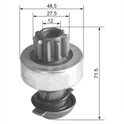
At Wuxi Superhuman Gear Cold Extrusion Co., Ltd., we've helped workshops and fleet operators troubleshoot countless starter engagement issues. And the question we hear most often isn't "What's a Bendix drive?" but "It's stuck-can I fix it, or do I need to replace the whole assembly?" The answer depends on what's actually stuck, why it happened, and whether repair makes sense for your situation.
Last spring, a regional delivery company brought us three starters that wouldn't engage in cold weather. The motors spun, but the pinion gears refused to slide forward. After disassembling them in our application lab, we found two had hardened grease clogging the helical splines, while the third had a fatigued return spring that couldn't overcome spline friction. Two were simple fixes; one needed replacement. The key wasn't guessing-it was systematic diagnosis.
Step 1: Diagnose Why It's Stuck
Before deciding on repair or replacement, identify the root cause. From our cold extrusion and failure analysis work at Superhuman Gear, four issues most commonly cause Bendix sticking:
- Contaminated splines: Road salt, dust, or metal debris can jam the helical shaft. If the pinion moves freely when cleaned and re-lubricated, repair is often viable.
- Lubrication failure: Grease that's too thick (cold weather) or too thin (high heat) affects pinion travel. One mining client reduced sticking incidents by 60% simply by switching to a temperature-stable synthetic grease.
- Spring fatigue: A weakened return spring may not retract the pinion fully, causing binding on the next crank. If spring testing shows >15% loss of rated force, replacement is usually smarter than repair.
- Mechanical damage: Bent splines, chipped teeth, or brinelled clutch rollers rarely repair well. If dimensional inspection shows out-of-spec geometry, replacement is the reliable choice.
Step 2: Repair vs. Replacement-A Practical Framework
Not every stuck Bendix needs a new assembly. Here's how we help clients decide:
✅ Repair may make sense when:
- The issue is contamination or lubrication-related
- Pinion gear teeth and clutch components show minimal wear
- The housing and splines are undamaged and within tolerance
- Labor and parts cost for repair is <50% of replacement
❌ Replacement is usually better when:
- Pinion teeth are chipped, hooked, or unevenly worn
- Clutch rollers or sprags show brinelling or surface degradation
- Spline clearance exceeds manufacturer specifications
- The unit has high operating hours or critical-duty application
One fleet operator we support initially tried repairing stuck starters in-house. After tracking warranty returns, they found that units replaced with precision cold-extruded components had 3x longer service life-making replacement more cost-effective over time.
Step 3: If You Repair-Do It Right
If diagnosis supports repair, follow these practical steps we share with workshop partners:
1. Clean thoroughly: Use solvent and brushes to remove all debris from splines and clutch mechanisms. Compressed air alone often misses embedded grit.
2. Inspect critically: Measure spline clearance, check tooth profiles, and verify spring force against specs. Don't assume "it looks okay."
3. Re-lubricate properly: Use manufacturer-recommended grease with appropriate temperature rating. Over-greasing attracts debris; under-greasing accelerates wear.
4. Test before reinstalling: Bench-test engagement under simulated load if possible. A quick functional check prevents repeat failures.
How Precision Manufacturing Prevents Future Sticking
At Wuxi Superhuman Gear, we've learned that many Bendix issues start with component quality. Cold-extruded pinion gears with consistent tooth profiles and optimized grain flow engage more smoothly and resist wear longer. Similarly, precision-formed splines with controlled surface finish reduce friction and contamination buildup.
One commercial vehicle client reduced Bendix-related service calls by 40% after switching to our cold-extruded pinions-not because we "fixed" sticking, but because better manufacturing prevented the conditions that cause it.
The Bottom Line
A stuck Bendix drive isn't always a death sentence for your starter. Sometimes a thorough cleaning and proper lubrication restore reliable function. But when wear or damage is present, replacement with precision-manufactured components often delivers better long-term value.
If you're troubleshooting starter engagement issues or evaluating repair strategies, share your specific operating conditions with us. At Wuxi Superhuman Gear Cold Extrusion Co., Ltd., we engineer starter components based on measured performance data and field-proven reliability. Because in automotive service, the best solution isn't the fastest fix-it's the one that keeps vehicles starting reliably, mile after mile.