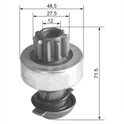
At Wuxi Superhuman Gear Cold Extrusion Co., Ltd., we've examined hundreds of returned Bendix drive assemblies over the years. And the question we hear most often isn't "What is a Bendix drive?" but "Why did it fail-and could we have seen it coming?" The answer usually lies in patterns of wear, not sudden catastrophe.
Last winter, a regional bus operator brought us a set of starters that had failed within six months of service. All showed the same symptom: intermittent engagement, followed by complete freewheeling. After sectioning the units in our lab, we found the root cause wasn't one dramatic failure-it was a combination of subtle issues: minor spline wear from dry engagement, lubricant thickening in cold weather, and a return spring that had lost tension after repeated thermal cycling. The failures weren't random. They were predictable.
Common Causes of Bendix Drive Failure
From our cold extrusion and testing experience at Superhuman Gear, five issues account for most Bendix drive failures:
1. Spline wear or contamination: The helical splines that guide pinion movement can accumulate grit, corrosion, or metal debris. Over time, this increases friction, preventing smooth travel. We've seen this accelerate in vehicles operating in dusty or high-humidity environments. One mining equipment client reduced spline-related failures by 70% simply by specifying a sealed drive housing and compatible high-temperature grease.
2. Overrunning clutch degradation: Internal rollers or sprags can develop micro-brinelling from repeated impact loads. When surfaces lose their precise geometry, the clutch slips under torque. A recent heavy-duty starter project traced this to lubricant breakdown at sustained cranking temperatures-something we now validate in our thermal cycling tests.
3. Return spring fatigue: Springs operate under constant stress and temperature swings. A fatigued spring may not retract the pinion fully, causing partial engagement on the next crank attempt. We've measured spring rate shifts of 15–20% after 50,000 simulated cycles at -30°C to +85°C.
4. Pinion gear tooth damage: Chipped, worn, or misformed teeth prevent clean meshing with the flywheel. At Superhuman Gear, we cold-extrude pinion teeth to improve grain flow and fatigue resistance-but even the best geometry can't overcome severe misalignment or excessive cranking loads.
5. Lubrication issues: Too little lubricant increases wear; too much attracts debris; the wrong viscosity affects engagement speed. One marine application required a corrosion-inhibiting grease that remained fluid at low temperatures-a small change that dramatically improved field reliability.
Warning Signs You Can Actually Notice
Bendix drives rarely fail without warning. From field feedback, these signs often precede complete failure:
- High-pitched whirring during cranking: Suggests the pinion isn't engaging-often a spline or spring issue.
- Grinding or clunking noises: Indicates partial or misaligned engagement, potentially from worn teeth or binding splines.
- Intermittent starting behavior: Works when warm, fails when cold (or vice versa)-often points to lubricant or spring performance shifts.
- Delayed engine turnover: The starter spins briefly before engaging-may signal sluggish pinion travel due to contamination or wear.
How We Help Clients Prevent Failures
At Wuxi Superhuman Gear, we don't just supply parts-we help diagnose and prevent engagement issues. When a client shares a field failure pattern, we:
- Analyze returned components to identify wear initiation points and failure sequences
- Measure critical dimensions (spline clearance, tooth profile, clutch geometry) against original specs
- Simulate real-world duty cycles in our test lab to reproduce and isolate root causes
- Recommend material, geometry, or process adjustments-like optimized cold-extrusion parameters or specialized heat treatment-to improve durability
One commercial vehicle client reduced their starter warranty claims by over 50% after we adjusted the pinion gear's cold-forming process to improve tooth root strength-simply by refining die geometry and extrusion speed.
The Bottom Line
Bendix drive failure is rarely sudden or mysterious. It's usually the result of predictable wear patterns, environmental stress, or subtle manufacturing variations that only reveal themselves under real-world use.
If you're troubleshooting starter issues or designing for improved reliability, share your specific operating conditions with us. At Wuxi Superhuman Gear Cold Extrusion Co., Ltd., we engineer starter components based on measured performance data and field-proven reliability. Because in automotive systems, the best components aren't the ones that never fail-they're the ones that give clear warning, last longer, and keep vehicles moving when it matters most.