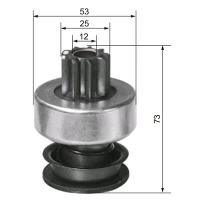
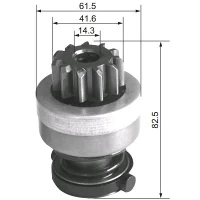
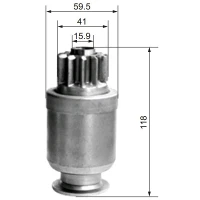
At Wuxi Superhuman Gear Cold Extrusion Co., Ltd., we've analyzed hundreds of returned starter components over the years. And the symptom we hear about most often isn't "My car won't start"-it's "The starter motor spins loudly, but the engine doesn't turn over." This classic "freewheeling" complaint almost always points to one area: the Bendix drive assembly. The answer isn't found in generic troubleshooting guides-it comes from understanding how real-world wear and manufacturing tolerances interact.
Last spring, a fleet maintenance client brought us a batch of starters from delivery vans that showed exactly this symptom: strong motor spin, zero engine engagement. After disassembling several units in our application lab, we found a consistent pattern. The pinion gears showed minimal tooth wear, but the helical splines had developed slight burrs from repeated dry engagement, and the overrunning clutch rollers had lost their precise roundness. The motor worked. The electrical system was fine. But the mechanical handshake between starter and engine had failed.
Common Bendix Drive Failure Modes
From our cold extrusion and testing experience at Superhuman Gear, three issues most frequently cause "spinning but not engaging" behavior:
1. Pinion gear binding on the splines: Dirt, corrosion, or worn helical splines can prevent the pinion from sliding forward to mesh with the flywheel. The motor spins freely because the gear never reaches the engagement position. We've seen this accelerate in vehicles exposed to road salt or infrequent use.
2. Overrunning clutch slippage: If the internal rollers or sprags wear, the clutch can't lock to transmit torque. The pinion may engage the flywheel, but torque isn't transferred-resulting in that characteristic high-pitched whirring sound. One heavy-duty application client traced this to lubricant breakdown at high cranking temperatures.
3. Weak or broken return spring: A fatigued spring may not pull the pinion back fully after startup. On the next crank attempt, the partially engaged pinion can't travel forward cleanly, causing grinding or freewheeling. Temperature extremes accelerate spring fatigue-a factor we now validate in our cold-crank testing protocol.
Why Manufacturing Precision Matters for Prevention
At Superhuman Gear, we've learned that many Bendix failures start long before the part reaches the vehicle. Subtle variations in cold-extruded gear geometry, spline surface finish, or heat treatment can shorten service life under real-world stress.
For example, a pinion gear with slightly inconsistent tooth profile may engage noisily, accelerating wear on both the pinion and flywheel. Or a clutch cage with marginal dimensional control may allow rollers to skew under load, causing premature brinelling. We control these variables through in-process monitoring and application-specific validation-not just final inspection.
Our Practical Approach at Wuxi Superhuman Gear
When a client shares a starter engagement issue, we don't start with assumptions. We request field-return samples when possible, then:
- Section Bendix assemblies to identify wear patterns and failure initiation points
- Measure critical dimensions (spline clearance, tooth profile, clutch geometry) against original specs
- Simulate engagement cycles under controlled loads and temperatures to reproduce the fault
- Recommend material, geometry, or process adjustments to improve durability
One commercial vehicle client reduced their starter warranty claims by 60% after we optimized the cold-extrusion parameters for their pinion gears-simply by improving grain flow alignment in the tooth root area.
The Bottom Line
A starter motor that spins but doesn't engage is rarely an electrical problem. It's almost always a mechanical handshake failure in the Bendix drive-caused by wear, contamination, or subtle manufacturing variations that only show up under real-world stress.
If you're troubleshooting starter engagement issues or designing for improved durability, share your specific operating conditions with us. At Wuxi Superhuman Gear Cold Extrusion Co., Ltd., we engineer starter components based on measured performance data and field-proven reliability. Because in automotive systems, the best parts aren't the ones that sound impressive-they're the ones that engage cleanly, start after start, mile after mile.