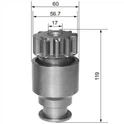
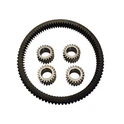
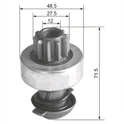
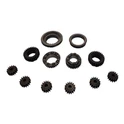
As someone who's spent the last 12 years supplying, repairing, and troubleshooting Bendix Drive components for heavy-duty and automotive applications, I can't tell you how many times I've fielded calls from mechanics, fleet managers, and even fellow suppliers asking the same question: "What's the real safety stuff I need to know when working with these things?" It's easy to see why people gloss over precautions-Bendix Drives are built to be rugged, designed to withstand the jolt of starting thousands of engines without breaking. But here's the thing: that ruggedness can lull you into complacency if you don't slow down and respect the physics (and the wear and tear) of how these parts work.
First, let's get on the same page about what a Bendix Drive actually is, because context matters. If you're working with one, you know it's that overrunning clutch and gear assembly that slides out to mesh with a car or truck's flywheel when you turn the key, then disengages the second the engine fires. It's the middleman between your starter motor and your engine, and its job is non-negotiable. At my company, we supply all the standard and specialized Bendix Drive models, but no matter which one you're handling-whether it's for a pickup truck, a semi, or even an industrial generator-safety starts before you even touch the part.
Let's start with the most basic precaution, and the one I see skipped more than any other: disconnecting the power source. I can't tell you how many times a mechanic has reached under the hood of a truck with the battery still hooked up, or turned the ignition without double-checking that the starter is isolated. A Bendix Drive's core function is to engage at high speed-if the starter accidentally powers on while you're holding the drive or working on the starter motor, that 20,000 RPM starter shaft can yank your hand or tool into the assembly faster than you can blink. Last year, a local fleet client had a tech burn his forearm when a truck's starter fired unexpectedly; the tech had forgotten to disconnect the negative battery terminal while replacing a faulty Bendix. That injury was entirely preventable. So rule number one, no exceptions: Disconnect the battery's negative terminal (and tape it to the frame so it can't slip back) before you even loosen a starter mounting bolt. For remote starter systems (common in newer vehicles), pull the fuse or cut the power to the starter circuit too-those don't always shut off when you turn the ignition to "off," and they're just as dangerous.
Next, handling the Bendix Drive itself. These parts are precision-made-tiny gears, calibrated springs, and that overrunning clutch that has to engage and disengage with perfect timing. But they're also made of hard steel, and they have sharp edges, not to mention the compressed spring that's built into many models. If you're prying a stuck Bendix off a starter shaft, or removing the gear housing, that spring can release suddenly if you don't support it properly. I once watched a new supplier associate yank the housing off a old industrial Bendix without holding the spring, and the housing flipped up and hit him in the cheek, requiring stitches. The fix here is simple: always work over a rubber mat (to catch small parts and prevent slips), and when disassembling, wrap the housing in a shop towel as you pull it off- that absorbs the sudden spring release and keeps the sharp edges from catching your skin. If you're replacing a worn Bendix, skip the guesswork: our team regularly provides step-by-step guides for Starter Bendix Replacement, a process that includes specific handling tips to avoid injury and ensure the part installs correctly. You can find that guide at our site to walk you through every step without the risk of mistakes that lead to harm.


Now, let's talk about the hazards that come from working around the engine and flywheel, since that's where the Bendix does its job. The flywheel is a massive, heavy steel disc-even a small car flywheel weighs 20+ pounds, and a semi can be three times that. If you're working near the flywheel, it's critical to block it from turning. The Bendix's gear is designed to mesh with the flywheel teeth, and if the engine is accidentally jostled, or you turn the key just enough to trigger a tiny spark, the flywheel can spin. If your hand is within a foot of those sharp, hardened flywheel teeth, they can tear through clothing and skin in seconds. I've seen mechanics use a pry bar to hold the flywheel, but that's risky-if the pry bar slips, it can snap your wrist. The right tool here is a flywheel lock: a simple steel pin that slides into the flywheel's access hole, holding it stationary while you work on the starter or Bendix. That's a small, cheap tool, but it eliminates one of the biggest accident risks when handling Bendix Drives for automotive or heavy-duty work.
Another big one is using the right tools for the job. I see this all the time: mechanics using a socket wrench that's too small for the starter mounting bolts, or a screwdriver that's too thin to pry the Bendix loose, leading to slips. When working with the Bendix Drive or its related components, you need torque wrenches for mounting (to make sure you don't over-tighten the starter, which can damage the Bendix's gear alignment) and precision screwdrivers for small parts like the retaining clips on newer model Car Starter Bendix units. Using the wrong tool not only risks damaging the expensive Bendix you're working on-damaged gear teeth or misaligned clutches mean you'll be replacing it sooner-but it also puts you at risk of slipping and cutting yourself. We supply a full line of Automotive Replacement Starter Drives, including the right tools and guides to match, so you don't have to make do with ill-fitting equipment. That page has recommendations for both the Bendix Drive and the tools that make working with it safe and effective.
Now, let's move to preventive measures that aren't just about safety for you, but about safety for the vehicle's long-term operation. A lot of people think "precautions" are just the things that keep you from getting hurt, but they also include steps that prevent the Bendix from failing unexpectedly on the road. When you're inspecting a Bendix Drive during a replacement, look for signs of wear: chipped gear teeth, a spring that's lost its tension, or grease that's thick and caked on (grease should be a light, semi-translucent oil for most models). If you skip inspecting these parts and install a worn Bendix, it can jam the flywheel mid-start, leading to a broken starter, a damaged flywheel, or even a cracked engine housing-all of which are costly and dangerous. Last year, we worked with a delivery company that had 3 semi-trucks stall on highways because their Bendix Drives failed due to worn gear teeth that weren't caught during a rushed replacement. To avoid that, we have a dedicated page for SVC PWR AWN, which outlines our inspection protocols for industrial and heavy-duty Bendix Drives, helping our clients catch wear before it leads to on-road hazards. This page is specifically tailored for service teams working with power-driven applications, so you know exactly what to check and how to address issues safely.
There's also a precaution around storing Bendix Drives. A lot of small repair shops stack boxes of replacement parts on the floor, and if a heavy part falls on your foot, that's a serious injury. Store Bendix Drives on wall-mounted shelves, not the floor, and keep them in their original packaging until you're ready to use them. The packaging is designed to protect the precision parts, and it also labels the model number, so you grab the right one for the job-no grabbing a Bendix that's too small for a heavy-duty truck and risking a misalignment that can cause the drive to disengage mid-start. If you're not sure which Bendix Drive you need for your specific application, our page for Bendix Drive has a complete catalog with model specifications, so you pick the right part the first time. That cuts down on time, reduces waste, and keeps you from working with mismatched parts that can be unsafe.
Let's talk about the one scenario that no one wants to face, but every tech should be prepared for: if something goes wrong while you're working, what do you do? Always keep a first aid kit within arm's reach in your work area, and know where the nearest emergency eye wash station is if you're working around sharp metal shavings or grease. If a Bendix part breaks while you're disassembling it, stop immediately-don't reach in to grab loose shards with your bare hands. Use a pair of needle-nose pliers or tweezers, and wear heavy-duty work gloves the entire time you're handling metal parts. I've had a couple of minor cuts from steel shavings that flew off a Bendix during disassembly, and even though they were small, they got infected because I didn't take the time to clean them properly afterward. The fix is simple: gloves, no bare hands, and antiseptic and bandages on hand for even small injuries.
At the end of the day, working with Bendix Drives doesn't have to be high-risk if you plan ahead and respect the part's design. The biggest mistake I see is treating it like a throwaway component that's easy to swap out without care. Every step-from disconnecting the battery to using the right tools, inspecting for wear, and even storing the parts correctly-adds up to a safe work environment and a reliable end product for the vehicle owner. If you're new to working with Bendix Drives, or you're looking for a trusted supplier that prioritizes safety as much as quality, reach out to our team. We don't just supply parts-we provide guides, inspection protocols, and support to make sure every tech works with these components safely and effectively.
If you have questions about specific models, replacement procedures, or safety protocols, our team is here to help with every step of your project. Don't take shortcuts when it comes to handling Bendix Drives-your safety, and the safety of the drivers who rely on those vehicles, is worth slowing down for.