If you've ever spent time troubleshooting a stubborn starting issue in a car, truck, or heavy-duty equipment, you've likely asked yourself this question: Can a starter drive be adjusted? As a starter drive supplier who's fielded hundreds of these exact questions from mechanics, fleet managers, and DIY enthusiasts over the years, I'm here to break this down clearly-no confusing jargon, just practical, science-backed answers based on what we see working (and what causes problems) in the field every day.
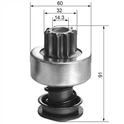
First, let's get on the same page about what a starter drive actually is. The starter drive-often referred to as a Bendix drive, because the original design was patented by Vincent Bendix in the early 1900s-is the small but critical component that connects the starter motor to the engine's flywheel or flex ring gear when you turn the key. Its job is simple: engage with the ring gear to crank the engine, then disengage immediately once the engine starts, so it doesn't spin dangerously fast. You might recognize common variants like the [9 Tooth Starter Drive], or specific fitments like [Starter Motor Bendix], [Prestolite Starter Bendix], [Ford Starter Bendix], or [Bosch Starter Bendix]-all of these work on the same core principle, even if their tooth count, mounting, or application varies.
Now, to the big question: Can you adjust it? The short answer is: sometimes, but with a lot of caveats. Most of the time, when a starter drive is acting up, the issue isn't something that can be fixed with a quick adjustment-it's wear or damage that requires replacement. But before we dive into that, let's talk about why adjustment ever comes up, and when it's actually possible.
When Would You Even Think About Adjusting a Starter Drive?
Starter drive problems almost always show up as one of four symptoms: the starter won't engage at all, it grinds loudly when you start the engine, it stays engaged after the engine starts, or it only engages intermittently. For many people, the first instinct is to reach for a wrench to "fix" something that feels out of alignment-and that's not a bad instinct, because a lot of the issues that cause those symptoms do have to do with misalignment, which can sometimes be adjusted.
Let's start with the most common misalignment issue: pinion height. The starter drive's pinion gear (the part that meshes with the flywheel ring gear) has a specific gap it needs to maintain with the ring gear teeth. If that gap is too tight, the pinion doesn't seat fully, causing grinding. If it's too loose, it might not engage at all, or might disengage prematurely. On some older starter designs-especially those used in older Ford trucks or small passenger cars-there are shims between the starter motor and the engine block that adjust how far the entire starter (and thus the drive pinion) sits from the flywheel. This is a common adjustment point, and it's actually designed to be tweaked during initial starter installation.
Wait, but hold on-this is not adjusting the starter drive itself, it's adjusting the mount of the entire starter assembly. That's an important distinction. The drive's internal components-the overrunning clutch, the spring that pushes the pinion out, the engagement armature-are mostly sealed units. You can't take them apart and adjust the clutch tension or pinion travel without specialized tools, because they're built to very tight tolerances at the factory. That's where a lot of confusion comes in: people talk about "adjusting the starter drive," when what they actually mean is adjusting the starter's mounting position to fix the pinion-ring gear mesh.


Another scenario where people think they're adjusting the drive is with the engagement fork that connects the starter's solenoid to the drive pinion. On many designs, the solenoid pushes a fork that slides the pinion into place. If that fork is bent, or the pivot point is loose, it can cause the pinion to not seat properly. Sometimes, you can straighten a bent fork or tighten a loose pivot bolt, and that fixes the issue-but that's repairing or adjusting a secondary part, not the drive itself. And if the fork is broken, no amount of adjustment will fix it; you'll need a replacement, like the [Ford Starter Bendix] designed for your specific model.
When Adjustment Isn't Possible (And Why That Matters)
Here's the thing: if your starter drive's internal components are worn, adjustment won't do a thing. Let's take the overrunning clutch-one of the most important parts of the drive. The overrunning clutch is what allows the pinion to spin with the starter when cranking, then freewheel once the engine starts, so the starter doesn't get spun at engine speed (which would destroy it). Over time, the clutch's internal rollers, springs, or ramps wear down. When that happens, the clutch slips, or doesn't engage at all, or stays engaged (a dangerous condition that can damage the flywheel or starter). There's no way to adjust worn clutch components-they're made to exact clearances, and once the material wears, the tolerances are off beyond what any adjustment can fix.
Tooth wear is another big one. The pinion gear on the drive and the ring gear on the flywheel are designed to mesh with very specific contact patterns. If either set of teeth is chipped, worn, or has uneven wear from previous grinding, no adjustment of the starter mount or fork will fix the mesh. Grinding will continue, and you'll end up damaging both the ring gear and the new starter drive if you don't replace the worn parts. We see this all the time: a mechanic tries to shim a starter with a worn ring gear, only to install a new drive that grinds immediately, because the ring gear teeth are already damaged.
Size and fit is another consideration. Different starters use different tooth counts for their drives-for example, a small passenger car might use a [9 Tooth Starter Drive], while a heavy-duty truck might use a 12-tooth design. Trying to adjust a drive to fit a different application or ring gear is a recipe for disaster; mismatched tooth counts mean the pinion won't engage properly, leading to grinding or failure. That's why using the correct, OEM-spec drive for your vehicle is non-negotiable.
My Experience As A Starter Drive Supplier: What Works (And What Doesn't)
Over the last 12 years in this business, I've helped thousands of customers work through starter drive issues, and I've learned a few key lessons. First: always diagnose the problem before you try to adjust anything. If your starter is grinding, don't just reach for a wrench to shim it. First, remove the starter and inspect the pinion and ring gear teeth. If they look worn or chipped, adjusting the starter mount won't fix it-you need to replace the drive, and often the ring gear too.
Second: if you do decide to adjust the starter mount (the shim method), do it correctly. Too many mechanics guess at the shim size, leading to either too tight or too loose a mesh. The rule of thumb for shimming is: add shims to the back of the starter (between the starter and the block) to move the drive closer to the ring gear, or remove shims to move it farther away. The goal is a 0.010-inch to 0.020-inch gap between the pinion teeth and the ring gear teeth when the drive is engaged. You can check this with a feeler gauge once the starter is bolted up and the solenoid is activated to push the pinion out.
Third: don't waste time trying to adjust a faulty overrunning clutch. If you test the drive by hand (with the starter disconnected from the battery, of course) and the pinion spins freely in one direction but sticks or spins with equal resistance in the other, the clutch is worn. There's no adjustment for that-you need a replacement drive. We stock a full range of Bendix drives, from common fits like [Starter Motor Bendix] and [Bosch Starter Bendix] to specialized options like [Prestolite Starter Bendix] for hard-to-find models, so you can get the right part the first time.
When Adjustment Is Worth The Effort
There are a few rare cases where adjusting the starter drive (or the starter mount) is the right call. For example: if you installed a new starter and it's grinding, and you know the ring gear is in good shape, adjusting the shim size can fix the mesh without replacing parts. Or if the engagement fork is slightly bent, straightening it and tightening the pivot bolt is a quick fix that will solve the intermittent engagement issue. But in both of these cases, you're not adjusting the drive's core function-you're fixing a minor installation or alignment issue.
The Bottom Line
So, to circle back to the original question: Can a starter drive be adjusted? The answer is: only in very specific, limited cases, and those cases almost never involve adjusting the drive's internal components. Most of the time, when you're dealing with a starter drive issue, the problem is wear, damage, or improper fit-none of which can be fixed with adjustment. Trying to adjust a worn drive will only lead to more problems, from grinding to premature starter failure.
That's why it's always best to start with a proper diagnosis, and when replacement is needed, use a high-quality, OEM-spec drive. Whether you need a [9 Tooth Starter Drive] for a small car, a [Ford Starter Bendix] for your work truck, or a specialized [Bosch Starter Bendix] for your fleet, having the right part from the start saves you time, money, and frustration down the road.
If you're dealing with a starter drive issue, or you need help finding the right part for your vehicle, reach out to our team. We've been supplying reliable starter drives to mechanics, fleets, and DIYers for years, and we're here to help you get your starting system back on track without the guesswork.