If you've ever seen a starter motor sputter, smell like burnt wiring, or seize up mid-engine crank, chances are the root issue is a component you might not've heard of until now: the Bendix for starter motor. As a supplier who's been on the front lines troubleshooting these parts for years, I've seen way too many guys brush over overheating Bendix drives until they're stuck on the side of the road-literally. Today, I'm breaking down exactly what causes these parts to overheat, straight from the shop floor and engineering notes I've got taped to my desk.
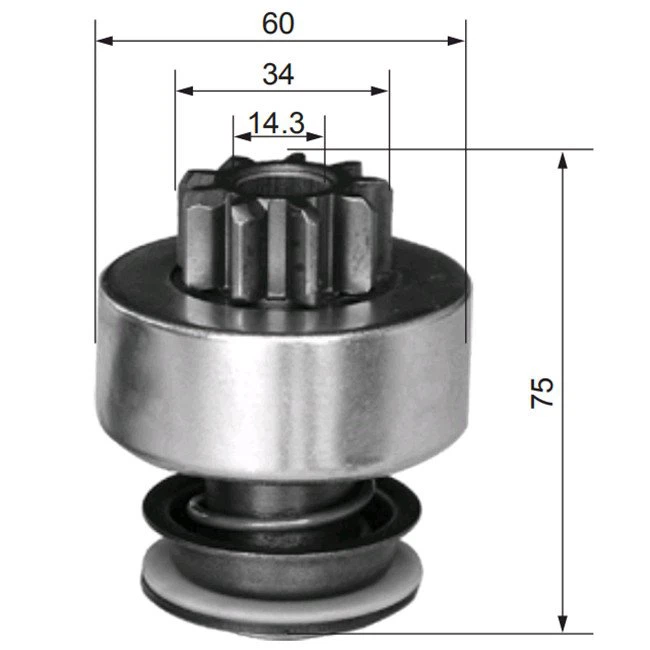
First off, let's keep this quick for anyone new: a Bendix drive is that little gear-and-clutch assembly that sits on the end of the starter motor shaft, right? Its whole job is to spin out and lock into the engine's flywheel teeth when you turn the key, then disengage the second the engine fires over. You might've also heard it called an inertia drive starter, but the Bendix style is the most common for passenger cars and light trucks, and we stock every variant from drive asm to bendix countershafts for any make or model. If you wanna deep-dive on how these drives work at the nuts-and-bolts level, check out these resources: Inertia Drive Starter, Bendix Drive, Starter Motor Gear Bendix Drive, and even specific parts like the Bendix Countershaft and Drive ASM. Now, onto the overheating culprits-most of 'em are avoidable, once you know what to look for.
Let's start with the big one I see every week: partial engagement of the Bendix gear with the flywheel. This is when the bendix drive doesn't fully slide forward and lock into the flywheel's teeth before the starter motor starts spinning at full tilt. Instead of the gear meshing cleanly, it's grinding against the flywheel's edge, creating constant friction. Friction equals heat-simple as that. Why does partial engagement happen? A few reasons. Sometimes it's a worn bendix countershaft: if the splines on that shaft get rounded or grooved from repeated use, the drive can't slide smoothly forward. Other times, it's a weak return spring that pulls the drive back too late, or a gritty clutch assembly in the drive asm that slows the gear's deployment. We had a customer last month who kept replacing starter motors thinking that was the issue, but turns out his flywheel had a chipped tooth that the bendix kept catching on-every spin it hung half-way, grinding until the bendix was glowing hot. Lesson there: even a tiny flywheel tooth defect can wreck a Bendix in a matter of weeks.

Next up: prolonged engagement past engine startup. This is the "starter whine that doesn't stop" issue, and it's a killer for Bendix drives. The second the engine catches, it starts spinning the flywheel way faster than the starter motor ever could-like, 10x faster. The Bendix drive's clutch is supposed to disengage right when that happens, so the starter doesn't spin too fast and overheat. But if the clutch sticks, or the bendix gear doesn't retract, the starter motor keeps turning the flywheel, and all that extra speed and resistance turns into heat so fast it can melt the plastic or burn the grease inside the drive asm. What causes that? Usually, a failed return spring (we call 'em "lazy springs" in the shop), or a build-up of gunk in the drive's internal components that keeps the gear locked out. We also see this a lot in guys who crank the starter for 5+ seconds at a time when the engine won't start-waiting 10 seconds between cranks isn't just a rule, it's how you keep the Bendix from frying.
Third on the list: insufficient or degraded lubrication inside the Bendix drive. Every Bendix drive has a small amount of high-temp grease packed in the clutch and spline areas to cut down on friction. Over time, that grease gets old, dries out, or gets contaminated with dirt and metal shavings from the starter motor's armature. When the grease is gone, the metal parts inside the drive asm rub directly against each other, no buffer. I've pulled bendix drives apart where the splines were so worn they looked sanded down just because the grease had hardened after 100k miles. And it's not just old age-if the drive wasn't lubricated properly during manufacturing (we check every part we ship for that, fyi, because we know how costly that mistake is), it'll start overheating within a few thousand miles. Guys who run off-road or in super dusty conditions (like construction or farm trucks) see this even faster, because dust works its way into the drive and eats through the grease in months, not years.
Another underrated culprit: high electrical resistance in the starter circuit. Wait, how does that tie to the Bendix drive? Let's break it down. The Bendix drive only works when the starter motor is getting the right amount of power. If there's a bad connection on the battery terminals, a corroded solenoid, or frayed wiring, the starter has to work way harder to turn over the engine. That extra load makes the starter motor draw more current-and that extra current heats up every component in the starter, including the Bendix. We did a test with a customer last year: his starter kept burning out Bendix drives every 3 months, until we checked his battery terminals and found they were corroded so bad the current draw was 2x the normal amount. Fixing the terminals? His Bendix drives haven't had an issue in 2 years. It's easy to blame the drive itself, but 1 out of 4 overheating Bendix issues we see are actually electrical problems, not part defects.
Oh, and let's not forget excessive axial play in the Bendix drive. Axial play is the amount of side-to-side movement the drive has on its shaft. A tiny bit is normal, but if it's too much (usually from worn splines or a bent shaft), the gear can wobble when it meshes with the flywheel. That wobble creates uneven pressure on the gear teeth and the clutch, leading to spot friction that heats up way faster than uniform contact. We had a customer with a 10-year-old pickup that had 1mm of play in his bendix drive-we measured it, and that extra wobble was causing 30% more heat build-up than a new, tight drive. It's a small thing, but it adds up to big problems fast.
Now, before you start panicking that every overheated Bendix is a disaster, let's be clear: most of these issues are preventable. Regular maintenance-checking battery connections, testing the starter's current draw, and making sure the Bendix isn't grinding when you crank the key-can catch these before they turn into a breakdown. For any shop or fleet manager looking for reliable Bendix drives, drive asms, bendix countershafts, or replacement parts, we've got stock for every common make and model, and our team can help diagnose what's causing your overheating issue before you order parts you don't need. If you're tired of dealing with Bendix drives that overheat prematurely and want to source parts that last, get in touch with our team to talk through your needs.