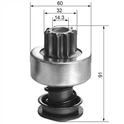
If you've ever turned the key in a car, truck, or even a small lawnmower and heard that satisfying rumble of the engine catching, you've witnessed a tiny but critical team working behind the scenes: the starter drive and the starter motor. As someone who's spent years sourcing and supplying starter drives for everything from passenger vehicles to industrial equipment, I can tell you this isn't just a "plug and play" relationship-these two parts talk to each other in super specific, high-stakes ways that make cranking your engine (and keeping it running) possible. A lot of folks mix up what each part does, so let's break it down like I would with a new tech on my team: no jargon, just real-world how-it-works stuff.
First, let's set the stage. The starter motor is the workhorse-its whole job is to spin the engine's crankshaft fast enough to get the fuel and air mixing, igniting, and running on its own. But here's the catch: when the engine is idling or running on its own, it spins way faster than the starter motor can. If those two parts were locked together the second you started the engine, that would be like strapping a bicycle to a Formula 1 car mid-race-total chaos. That's where the starter drive comes in. Think of it as the middleman, the traffic cop, and the safety all rolled into one small part.
Let's start with the initial engagement, the part that happens the second you turn that key. When you hit the ignition, two things happen in rapid order: the starter motor starts humming, and the starter drive extends to mesh with the engine's flywheel (or flexplate, for automatic cars). Most of the time, that drive is some version of a Bendix-type drive, right? You've probably seen terms like Standard Bendix Drive floating around parts catalogs-that's the basic model that's been used for decades. The Bendix design uses a splined shaft on the starter motor that lets the drive gear slide forward and twist a little to line up with the flywheel's gear teeth. No grinding, hopefully-if it grinds, that's usually a sign the drive is worn or the starter motor is slow to engage.
Wait, let's get specific about that mesh. The starter motor's output shaft isn't just spinning fast-it's under a lot of torque (the twisting force that moves the engine). The starter drive's gear has to catch that torque and transfer it to the flywheel without slipping before the engine starts. That's where the overrunning clutch in the starter drive comes into play, and honestly, that's the core of how these two parts interact. The clutch is like a one-way gate: when the starter motor is spinning to crank the engine, the clutch locks, so torque passes straight through to the flywheel. Once the engine fires up, it takes over spinning that gear-and since the engine is now spinning faster than the starter motor, the clutch disengages, letting the starter drive spin freely without being dragged along at engine speed. No more stress on the starter motor, no burning out parts. That's a win-win, and it's why the design of the drive-whether it's a Starter Motor Gear Bendix Drive or a more specialized Bosch Starter Bendix for specific vehicle lines-has to be matched exactly to the starter motor it's paired with. I've seen installations where someone swapped a generic drive for a Bosch one and ended up with slipping mid-crank because the clutch engagement profile was wrong. It's not just about size; it's about how the clutch locks and releases at specific RPMs.
Let's talk about RPM, because that's the hidden language between the starter drive and motor. When you crank the engine, the starter motor operates at a narrow RPM range-usually between 150 and 300 RPM, depending on the engine size. The drive is calibrated to lock up solid within that range, so all the motor's torque goes to turning the flywheel. The second the engine hits its firing point (usually around 400 RPM), it jumps ahead, so the drive's overrunning clutch needs to disengage instantly. If the timing is off? Two bad things: either the clutch slips while cranking, so the engine doesn't catch, or it takes too long to disengage once the engine is running, which fries the starter motor in seconds. I remember a job a few years back for a heavy-duty truck fleet-their old starter drives were calibrated for a 300 RPM lock, but their new starter motors spun at 350 RPM. The result was they were burning out 2-3 starters a week until we swapped in the right Engine Starter Bendix units tuned for that specific motor's RPM curve. That's how critical that interaction is-it's not just a physical connection, it's a synchronized dance based on speed.
Another thing most people don't think about: the physical load on both parts. The starter motor is a high-torque, short-duration device-it only runs for 2-10 seconds per start, max. The starter drive has to handle that peak torque without bending the gear, stripping splines, or wearing out the clutch. That's why the construction of the drive (like the Drive ASM assemblies we supply, which integrate the gear, spline, and clutch into one unit) matters. The gear teeth on the drive have to be hard enough to handle the impact of meshing with the flywheel every time, but not so brittle that they chip if there's a little misalignment. The splined shaft has to slide smoothly to engage, even if it's dirty or has a little corrosion from sitting in a cold garage. And the clutch springs have to be the right tension-too tight, and the drive can't extend to mesh; too loose, and it slips when you crank the engine.
Let's get into the troubleshooting side, because this is where the interaction really shows its flaws. If your car cranks slowly, or makes a high-pitched whine once it starts, that's almost always a bad link between the drive and the motor. Slow cranking is often the drive slipping-instead of transferring the motor's torque to the flywheel, it's spinning on the shaft, so less force gets to the engine. That can also be caused by a worn clutch in the drive, which means it's not locking properly when the motor is spinning. The whine after start-up is the opposite: the clutch isn't disengaging, so the starter motor is being spun by the flywheel at engine RPM. Starter motors are designed for low, short bursts of high speed, not sustained high RPM-so that whine is a warning that you're about to blow the starter. I've had customers bring me starters that looked fine on the outside, but tear-down showed the drive's clutch was seized, so the motor was over-speeding for minutes at a time. That's the kind of failure that's 100% the result of poor interaction between the two parts.


Now, let's talk about how this interaction has evolved over the years. The classic Bendix drive we know is over 100 years old, but modern vehicles have added more complexity. For example, many automatic transmission cars now use pre-engaged starter drives, which do the extending and meshing before the motor spins up-no more sliding and twisting mid-spin, less wear on both parts. That's a big improvement, but it means the drive has to work with the motor's control module now, not just mechanical timing. The motor sends a signal to the drive's solenoid, which moves the gear into place, then the motor turns on. If that solenoid or signal is off, the drive doesn't engage, and the motor can't do its job. For performance vehicles or industrial equipment, there are even engaged drives with built-in sensors that monitor RPM and clutch wear, so they can adjust engagement timing in real time. But no matter how fancy it gets, the core relationship is still the same: the drive is the middleman between the motor's torque and the engine's needs.
As a supplier, I've seen firsthand how even small mismatches can cause big problems. Last year, a customer tried to save a few bucks by buying a starter motor from a different brand and pairing it with an off-the-shelf Bendix drive. Their engine wouldn't start half the time, and when it did, the starter would smoke after a week. When they sent over the parts, we tested them together, and found the motor's output torque was 15% higher than the drive was rated for. The clutch couldn't handle the initial peak load, so it slipped mid-crank, and then wore out quickly. It was a easy fix once they used a drive rated for that motor-no more issues. That's why we're big on matching each drive to the specific starter motor, not just selling a one-size-fits-all part. We know that the interaction between these two parts isn't something you can guess at-it needs to be calibrated for speed, torque, RPM range, and even the application (passenger car vs. semi truck vs. generator).
Another thing I want to mention: maintenance. A lot of people wait until the starter fails to check these parts, but you can extend the life of both the drive and the motor by keeping them clean. Dirt and grime can get into the splines of the drive, making it hard to extend and mesh, which adds extra stress to the motor every time you start the engine. In cold weather, that's even worse-grease in the splines can thicken, so the drive can't slide smoothly, leading to grinding and wear. A quick check during oil changes, or a spray of white lithium grease on the splines every few years, can prevent a lot of headaches. I always tell my customers that the drive is the first part to go bad, and replacing it when it starts to show signs of wear (like slow cranking or a grinding noise when engaging) will save them from having to replace the whole starter motor later. It's way cheaper to swap a [$Standard Bendix Drive] than a $500 starter motor.
Let's wrap this up with the big picture: the starter drive and starter motor are a perfect example of how even the smallest parts in a vehicle work together to make something huge happen. Without that drive, the starter motor couldn't transfer torque to the flywheel, and without the motor, the drive would just sit there doing nothing. Their interaction is all about timing, torque, and speed-three things that have to line up exactly for the engine to catch every time. As someone who's been in this business for years, I can say that understanding this relationship is the key to picking the right parts, troubleshooting issues fast, and making sure your customers' vehicles (or equipment) start reliably, every single time.
If you're working on a project, restocking parts for your shop, or need custom solutions for industrial or off-road applications, don't hesitate to reach out to us. We've got a full line of starter drives, from classic Bendix units to specialized pre-engaged drives, all calibrated to work with a wide range of starter motors. We can help you pick the right part, test compatibility, and make sure that critical interaction between drive and motor works as it should. Let's connect to get your orders or questions sorted out.